

Hemp nutrition · Healthy aging · Evidence reviewed September 28, 2026
Breakfast has become a cup of coffee and a piece of toast. By midafternoon,
an older parent says they are not hungry enough for lunch. A bag of hemp
protein powder looks like an easy fix—but how much useful protein will that
scoop actually add?
The answer depends on the Nutrition Facts panel, the rest of the meal,
appetite, and any medical nutrition plan. Hemp protein is food, not a
treatment for age-related muscle loss.
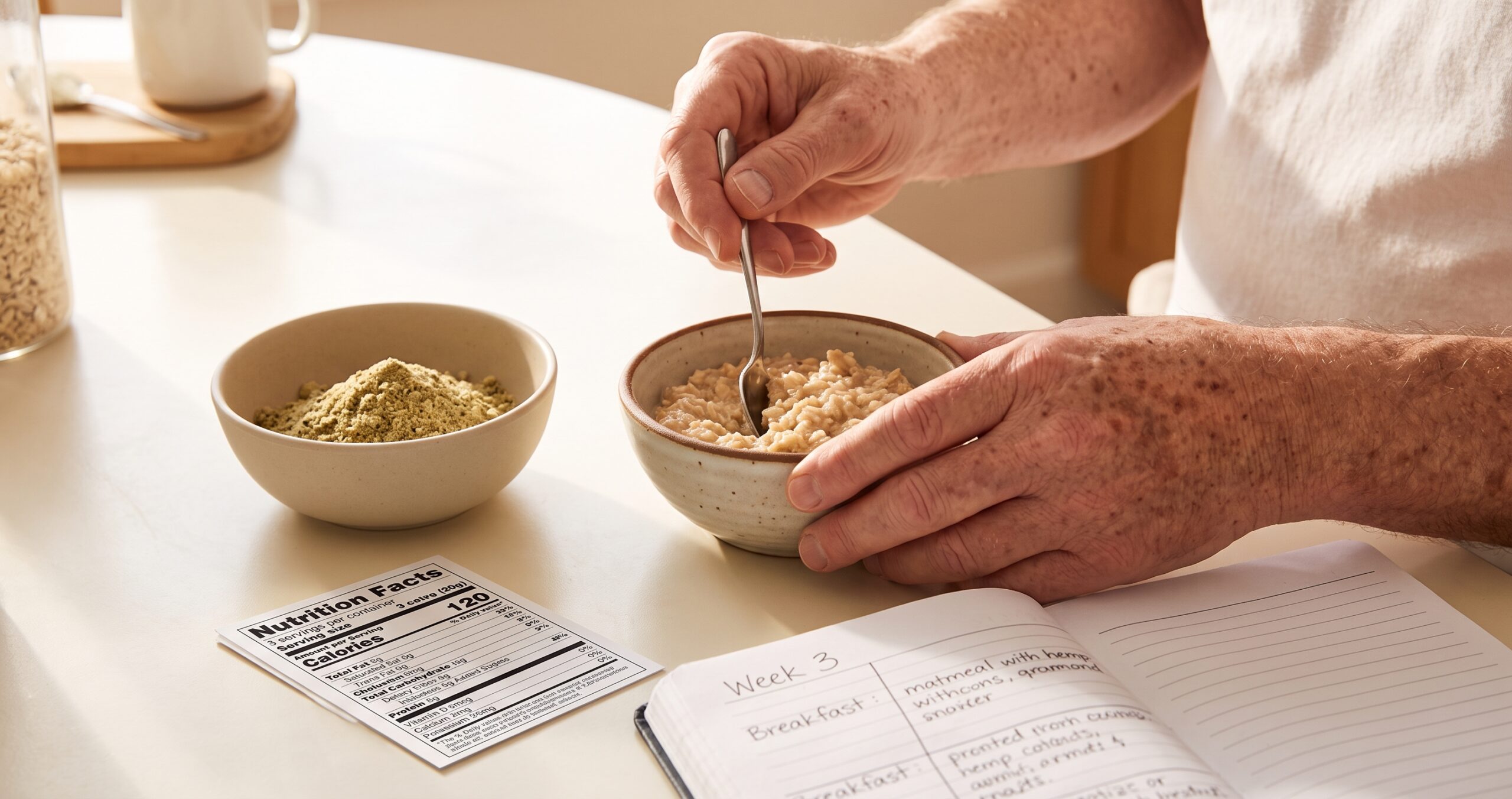
add protein when ordinary meals fall short. Check the grams of protein per
actual serving and add that amount to a food or drink the person will
enjoy. It is not a substitute for varied meals, activity, or individualized
advice if there is kidney disease, unintentional weight loss, swallowing
trouble, or another medical concern.
Start with the missing meal
Before buying a powder, write down a typical breakfast, lunch, dinner, and
snack. Look for the meal that repeatedly has little protein. The
National Institute on Aging recommends getting protein through a variety
of foods across the day
.
If breakfast already includes yogurt, eggs, or a protein-rich soy food, an
extra scoop may add little value. If breakfast is only toast, a measured
addition to oatmeal or a smoothie may be more practical. A clinician or
registered dietitian can set an individual target when illness, frailty, or
restricted diets complicate the picture.
The three-part meal check
- 1. Find the protein gap
- 2. Read grams per serving
- 3. Check the whole meal
What the label can and cannot tell you
Find the serving size in grams, the protein grams for that serving, fiber,
calories, and the ingredient list. Two bags that both say “hemp protein”
may deliver different amounts per scoop. Compare equal measured servings
rather than package slogans.
Hemp protein supplies amino acids, but its amino acid proportions and
digestibility vary with processing. A “complete protein” claim does not
mean that a small scoop meets the needs of an entire meal. Our
complete-protein guide
explains that distinction, while the
muscle-building guide
looks at training and the full day’s intake.
| Situation | Useful first step | What to watch |
|---|---|---|
| Low-protein breakfast, normal appetite | Add a familiar protein food or a measured hemp serving to breakfast | Count protein in the entire meal |
| Small appetite | Choose a compact, appealing meal or snack; discuss persistent appetite loss | A high-fiber shake may feel filling before enough food is eaten |
| Kidney disease or mineral limits | Bring the exact product label to the renal dietitian or clinician | Protein, potassium, phosphorus, and lab-specific limits |
| Difficulty chewing or swallowing | Seek a swallowing assessment and suitable texture guidance | Do not assume a thin smoothie is safe for everyone |
Make the addition fit a real breakfast
Try a modest labeled portion in oatmeal, yogurt, or a smoothie, then
calculate the meal’s protein from all ingredients. If the flavor or
texture makes the meal less appealing, a different ordinary protein food
may work better. Our
taste and texture guide
has preparation ideas.
Some powders contain considerable fiber. A sudden large serving can cause
discomfort; our
gas and bloating checklist
helps examine the whole recipe. Hemp seed-derived protein powder is an
established food ingredient under the conditions described in the
FDA’s hemp seed ingredient notices
; that review does not prove a given powder treats muscle loss.
unexplained weight loss, weakness, difficulty swallowing, or kidney disease
calls for professional assessment. For kidney-related questions, use our
kidney safety guide
and bring the actual label and recent lab results to the care team.
A simple seven-day meal planner
For one week, note the meal, the protein food already present, any measured
hemp serving, and whether the person finished and enjoyed it. This is a
practical food record, not a diagnostic test. Review it with a dietitian
if the concern persists.
- Meal: Which breakfast or snack needs help?
- Label: How many grams of protein does the measured amount add?
- Experience: Was it palatable, comfortable, and enough food overall?
- Follow-up: Has weight, strength, appetite, or a health condition changed?
Four-question knowledge check
Choose an answer before opening each explanation.
1. Does “one scoop” tell you how much protein is in the product?
No. Scoop size and protein concentration differ. Read grams of protein
per labeled serving.
2. Is hemp powder alone a complete breakfast for an older adult?
Usually no. Consider the full meal, including enough energy and a variety
of foods. See our
meal-replacement guide
.
3. Should someone with kidney disease follow a general “more protein” tip?
No. Protein and mineral needs depend on the condition and treatment. Ask
the care team to review the exact label.
4. If a new shake reduces appetite for lunch, is more powder automatically better?
No. The complete day’s food intake and comfort matter more than
maximizing a scoop.
Frequently asked questions
Is hemp protein better than whey or soy for older adults?
There is no universal winner. Compare actual protein per serving, amino
acid quality, tolerance, dietary preference, cost, and the rest of the
meal. See our
hemp versus whey
and
hemp versus soy
comparisons.
Can an older adult take hemp protein every day?
It can be part of a varied diet if tolerated, but daily use should fit
individual protein and energy needs. Read
how much hemp protein per day
before making a routine.
Does hemp protein contain CBD?
Hemp seed does not naturally contain CBD or THC. Trace amounts can arise
through contact with other plant parts during processing; the FDA
distinguishes seed-derived food ingredients from products with added CBD
or THC.
What if the goal is stopping muscle loss?
Do not rely on a powder alone. Ask a clinician about unexplained weakness
or weight loss and an appropriate plan for meals and physical activity.
The
National Institute on Aging discusses strength training
as one part of healthy aging.
What would you check first?
Hemp protein can be a useful ingredient when it fills a real gap and the
meal still works for the person eating it. In the comments, tell us which
is harder in your household: getting enough protein at breakfast, finding
a pleasant texture, or choosing a powder from the label. Please leave out
personal medical details.
Editorial note: General food information, not personal
medical advice. No product is endorsed or affiliate link added without a
verified fit. Evidence reviewed September 28, 2026.