

Hemp nutrition · Texture troubleshooting · Evidence reviewed
You followed the serving directions, added liquid and stirred—yet the drink still tastes earthy and leaves a sandy layer behind. Before you hide it under syrup or throw away the bag, separate three problems that often get blamed on “hemp”: the powder itself, the powder-to-liquid ratio and the mixing method.
Quick answer: How do you make hemp protein taste better and feel less gritty?
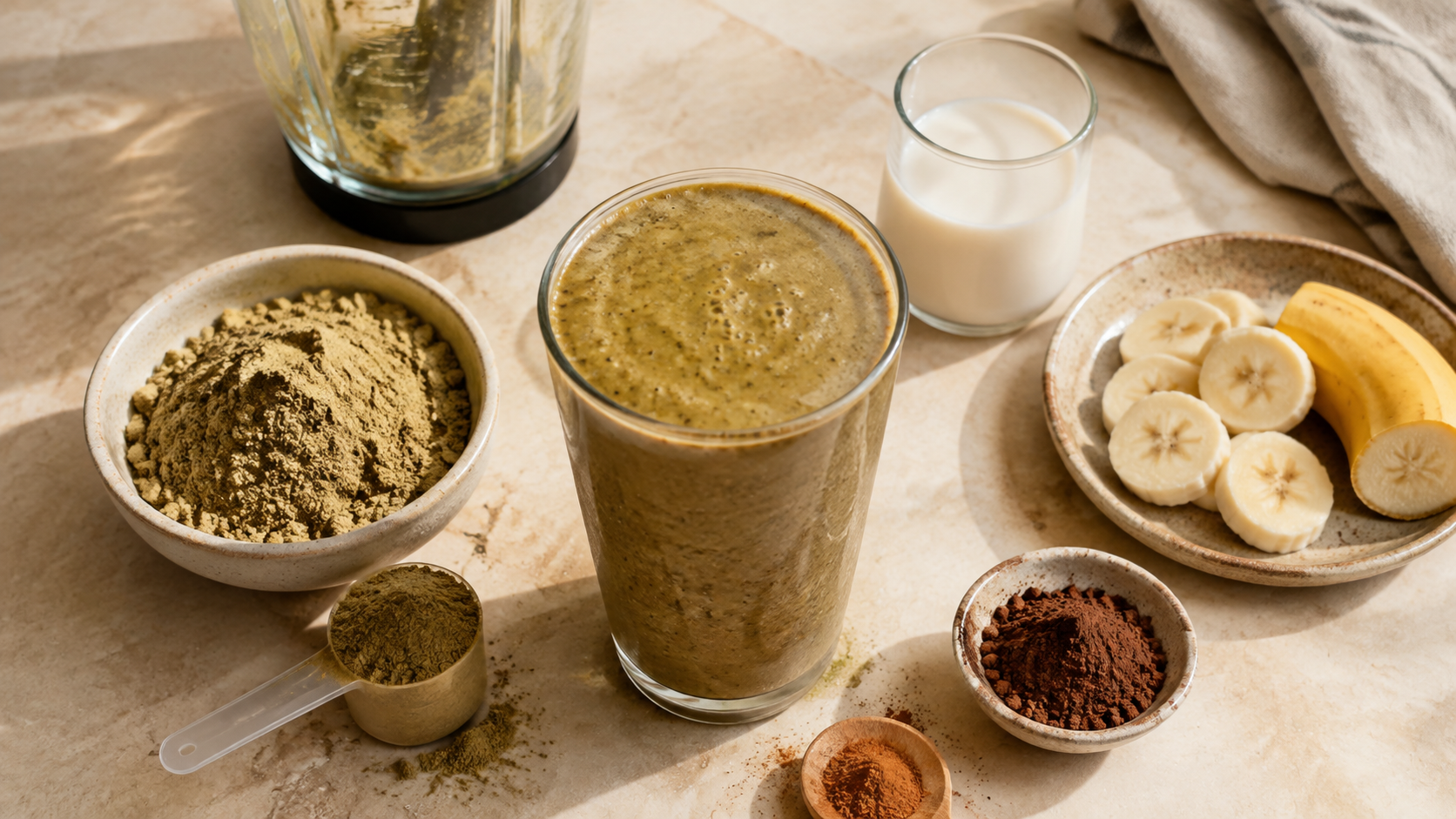
Use a blender when texture matters most, begin with enough cold liquid, add a measured amount of powder gradually and pair its earthy flavor with one familiar ingredient such as banana, cocoa or cinnamon. Hemp protein may not dissolve like sugar because the finished powder can contain poorly soluble protein, fiber and particles that remain suspended rather than disappearing into the liquid.
Do not judge every bag by one universal recipe. Processing, sifting, ingredients, serving weight and fiber content vary. The label on your product—and a small, controlled test—offers better guidance than simply adding more sweetener.
Hemp protein’s texture is not a surprise once you look at how the food is made. As explained in Hemp Protein Powder vs. Hemp Hearts, many hemp protein powders begin with seed material left after oil pressing. Milling and sifting then create products with different protein, fiber and particle profiles.
That is useful context, but it does not mean gritty is always good—or that smooth is always better. A coarse powder may be a poor fit for plain water, while a more finely processed blend may behave differently. Added gums, flavors, sweeteners or other proteins can also change the result. Start with the ingredient list instead of assuming every green-brown powder is the same.
Why hemp protein can feel gritty instead of dissolving
Some hemp proteins interact poorly with water at neutral pH, so part of the powder can remain dispersed or settle instead of fully dissolving.
Less-refined powders may retain more non-protein material. Those particles can be nutritionally relevant and still create a sandy mouthfeel.
A large scoop in a small glass leaves less room for particles to spread out. The drink may turn thick, dry or chalky before it tastes balanced.
Suspended particles can drift downward after mixing. A drink that seems smooth at first may develop sediment while it sits.
A 2024 food-science study found low solubility for the hemp protein isolates it tested in neutral water, with differences linked to protein surface properties. That helps explain why water alone may not produce a perfectly uniform drink. However, the study tested specific isolates under controlled conditions—not every retail hemp powder, smoothie or kitchen blender. It supports the mechanism, not a universal recipe.
Processing matters too. The manufacturing process described in FDA GRAS Notice 771 includes oil pressing, milling and sifting into different particle-size fractions. That is one reason the phrase hemp protein powder describes a category rather than a single identical texture.
Stir vs. shake vs. blend: which method works best?
On a phone, swipe the table sideways to see every column.
| Method | Likely result | Best fit | Watch for |
|---|---|---|---|
| Spoon or fork | Fast, but clumps and settling are more noticeable. | A small amount mixed into oatmeal, yogurt or another already-thick food. | Dry pockets along the bottom and sides of the cup. |
| Shaker bottle | Better dispersion than stirring, especially when liquid goes in first. | A portable drink when a blender is unavailable. | Foam, trapped powder near the lid and sediment if the drink sits. |
| Blender | Usually the smoothest and most even immediate result. | Smoothies with fruit, yogurt or another texture-building ingredient. | Too little liquid, excessive thickness or over-aeration. |
| Thick-food mixing | The food masks sediment better than plain water. | Oatmeal, yogurt-style foods, energy bites or recipes designed for dry ingredients. | The powder can make a recipe drier; add gradually and follow the recipe. |
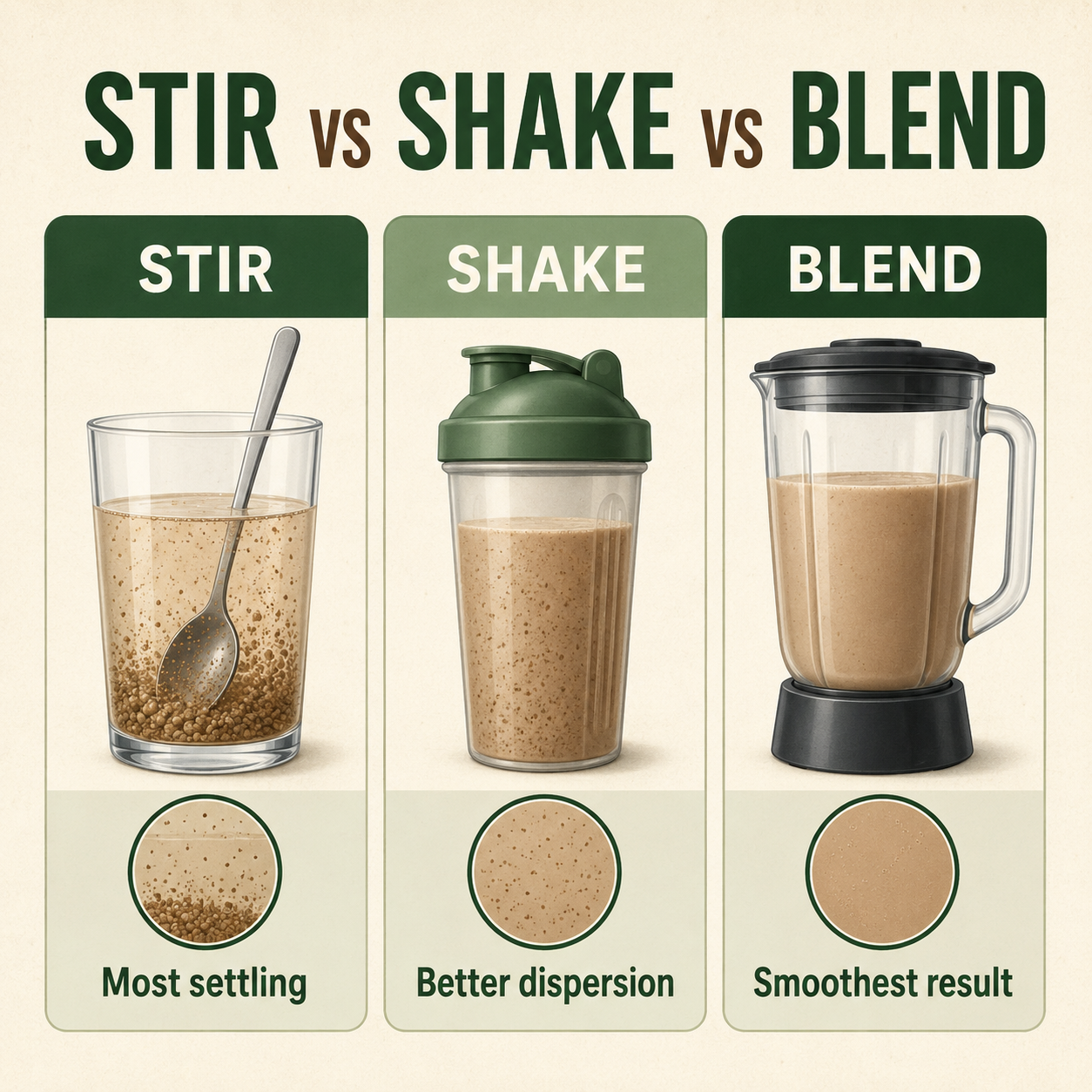
For a shaker bottle, liquid goes in first
Putting dry powder into an empty bottle and pouring liquid over it can create a damp layer that sticks to the base or corners. Add the liquid first, then the measured powder, close the lid completely and shake. Re-shake briefly if the drink has been sitting.
For a blender, start thinner than the final texture
A blender needs enough liquid to circulate the ingredients. Begin with the labeled amount of powder and a little more liquid than you think you need; then thicken the drink with a familiar ingredient if desired. Starting too thick can leave powder on the jar wall and force you to add more ingredients than the drink needs.
For oatmeal or yogurt, make a small paste first
Stir the powder with a small amount of the food or liquid until the largest dry pockets disappear, then fold that mixture into the full bowl. This does not change the protein, but it can distribute the powder more evenly than dumping a full scoop onto the top.
How to balance the earthy flavor without turning the drink into dessert
The goal is not to erase hemp protein’s identity. It is to decide whether one deliberate flavor partner makes the drink enjoyable enough to repeat. Choose a familiar ingredient you already tolerate, and change only one thing during the first test.
- Banana: adds body and familiar sweetness, which can soften both earthiness and grittiness. It also changes the drink’s carbohydrate and calorie content, so it is part of the meal—not a “free” masking trick.
- Unsweetened cocoa: matches hemp’s roasted, earthy direction instead of fighting it. Start modestly; cocoa can add bitterness of its own.
- Cinnamon or vanilla: changes aroma without requiring a large amount of added sugar. Flavoring products still vary, so read their labels.
- A familiar creamy base: milk, a fortified plant beverage, yogurt or a comparable food can make particles less obvious than water. Their protein, sugar, allergens and calories differ, so choose according to the full meal and your needs.
- Ice or a chilled base: can make a drink feel more refreshing, but cold does not guarantee that the powder dissolves. Re-blend or re-shake if particles settle.
Avoid adding banana, oats, nut or seed butter, yogurt, cocoa, dates and sweetener all at once during the first test. That may produce an enjoyable smoothie, but it does not tell you which change fixed the problem—and it can turn a quick protein drink into a much larger meal.
If the drink also causes gas or uncomfortable fullness, texture is not the only variable. Use the label-and-recipe checklist in Does Hemp Protein Cause Gas or Bloating? rather than assuming the grassier flavor proves the powder is difficult to digest.
The Hemp Protein Texture Planner
This four-step planner turns “I hate this powder” into a small, useful experiment. It is not a reason to keep consuming a product that smells spoiled, has been contaminated by moisture or caused a possible allergic reaction.
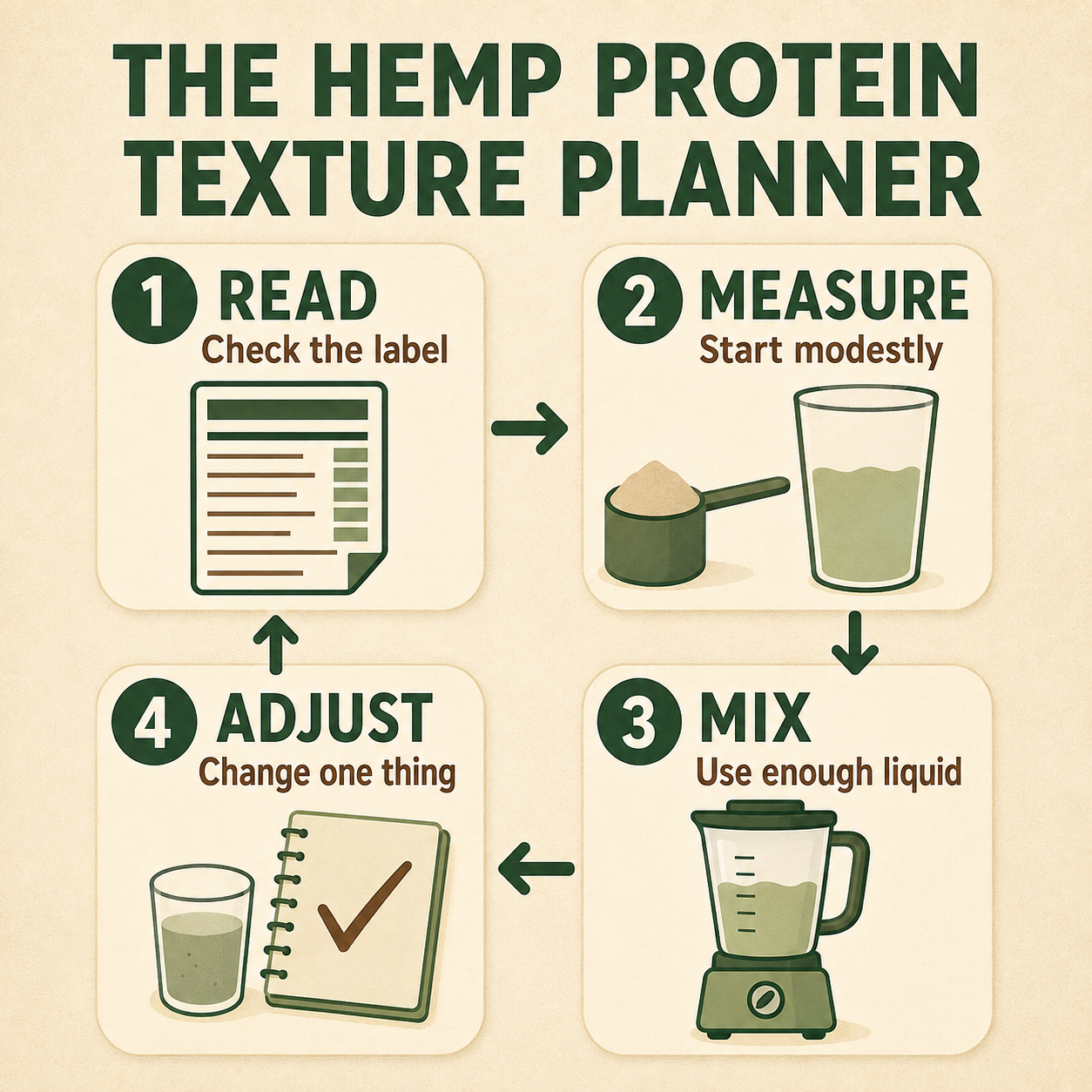
Record the serving weight, protein, fiber, ingredients, added sugars and directions. A plain powder and a flavored multi-protein blend are different tests.
Use the package directions and a level scoop or gram weight. More powder usually makes grit and thickness more noticeable; it does not automatically make the drink better.
Add liquid first, then powder. Blend when possible. Note the liquid type, approximate amount, mixing method and whether the drink settled after a few minutes.
On the next attempt, change only the liquid amount, mixing method or one flavor partner. Keep the better version and discard the change that did not help.
A simple side-by-side kitchen test
Divide one label-compliant serving between two small drinks made with the same liquid. Stir one and blend or shake the other. Taste each immediately, then check again after it sits briefly. Compare clumps, sediment, thickness, earthiness and whether you would realistically finish it.
This is a texture comparison, not a medical test. Do not conduct a home re-challenge if the product previously caused hives, mouth or throat symptoms, facial swelling, wheezing, dizziness, trouble breathing or another possible allergic reaction.
When the problem may be the product—not your recipe
Grittiness alone does not prove that a powder is spoiled. A normal hemp protein product may be earthy, green-brown and more textured than a highly refined isolate. Still, recipe tricks should not be used to hide obvious quality problems.
- Check the best-by date, seal and package directions.
- Look for moisture, unusual hard clumps, insects, visible mold or damaged packaging.
- Stop if the powder smells rancid, paint-like, moldy or sharply different from when the bag was opened.
- Keep the bag tightly closed and use a clean, dry utensil.
- Follow the manufacturer’s storage directions instead of assuming every powder belongs in the same cabinet.
If a coarser powder never fits the job, switching food forms may be more realistic than endlessly repairing the drink. Hemp Hearts vs. Hemp Seeds explains how removing the hull changes texture and everyday use. Hemp hearts are not a one-for-one protein-powder replacement, but they may fit meals where softness matters more than protein concentration.
Four-question interactive knowledge check
Choose your answer before opening each explanation.
1. If hemp protein settles, does that automatically mean it is spoiled?
Answer: No. Limited solubility, fiber, particle size and the mixing method can all contribute to settling. Check the date, seal, storage history, smell and appearance for actual quality concerns.
2. Which method usually gives the smoothest immediate result: stirring, shaking or blending?
Answer: Blending. A blender generally breaks up clumps and disperses particles more evenly. That does not mean every component has fully dissolved, and the drink may still settle later.
3. Is adding several sweet or creamy ingredients at once the best way to learn what fixed the drink?
Answer: No. The drink may taste better, but you will not know which change helped. Adjust one variable at a time if you want a repeatable recipe.
4. Does one laboratory solubility result predict how every retail hemp powder will behave?
Answer: No. Research can explain why poor dispersion occurs, but retail products differ in processing, particle size, fiber, ingredients and serving directions. Use the actual label and a small kitchen test.
Frequently asked questions
Does hemp protein dissolve completely in water?
Not necessarily. Some protein may disperse while fiber and other particles remain suspended or settle. Shaking and blending can improve mouthfeel without making every component chemically dissolve.
Why does hemp protein taste grassy or earthy?
Hemp protein retains seed-derived compounds and may be less refined than neutral-tasting isolates. Processing and added ingredients change the flavor, so earthy is common but not identical across brands.
Can I mix hemp protein with only water?
Yes, if the package permits it, but water gives the powder nowhere to hide: earthiness, sediment and thickness may be more obvious. Add water first, use the labeled serving and shake or blend rather than relying on a quick stir.
Does blending destroy the protein?
Ordinary kitchen blending changes particle distribution and texture; it does not remove the protein from the drink. What matters more is whether the full recipe and serving fit your nutrition needs.
Can I bake with hemp protein powder?
Many powders can be used in baking, but they absorb liquid differently and may make a recipe dry or dense. Follow a tested recipe or the manufacturer’s directions, and replace only a small portion of flour unless the recipe was designed for protein powder.
Is a smoother hemp protein powder always healthier?
No. Smoothness can reflect finer processing, different fiber content or added gums and sweeteners. Compare protein, fiber, added sugar, sodium, ingredients and serving weight rather than using texture as a health score.
Authoritative sources and further reading
- Current Research in Food Science: Hemp protein extraction, structure, functionality and nutritional quality
- U.S. FDA GRAS Notice 771: Hemp seed protein
- U.S. FDA: Hemp seed-derived ingredients for use in human food
Nutrition and safety note: This article provides general education and does not diagnose, treat or replace advice from a physician, registered dietitian, allergist or other qualified professional. Individual guidance matters for food allergies, kidney disease, medically directed diets, digestive disorders, pregnancy, childhood nutrition or persistent symptoms.
What finally made your hemp protein drink work?
In the comment section, share the mixing method, liquid and one flavor partner that improved the result—or the label detail that explained why it never did. Please keep medical histories private; a practical recipe comparison is enough to help the next reader.