

Hemp nutrition · Clear comparison · Practical uses
One small hull creates a meaningful difference
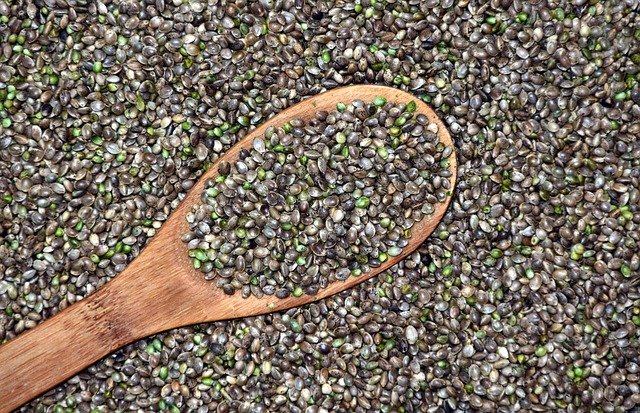
Hemp hearts and whole hemp seeds come from the same plant, yet they do not behave like the same food. One is soft enough to disappear into oatmeal. The other keeps its firm outer shell, adding more crunch and changing the balance of fiber, protein, and fat by weight.
That difference is easy to miss when packages use “hemp seeds,” “shelled hemp seeds,” and “hemp hearts” almost interchangeably. Once you know what has—and has not—been removed, choosing between them becomes much simpler.
The quick answer
Hemp hearts are hemp seeds with the hard outer hull removed. They are tender, mildly nutty, and easy to sprinkle or blend into meals. Because the hull has been removed, protein and fat generally make up a larger share of their weight, while fiber is lower.
Whole hemp seeds keep the outer hull. They are firmer and crunchier and generally provide more fiber, but their precise nutrition depends on the variety, processing, serving size, and brand.
Neither one should be expected to provide CBD effects. Hemp seeds do not naturally contain meaningful amounts of CBD or THC.
Hemp hearts vs. hemp seeds at a glance
| Question | Hemp hearts | Whole hemp seeds |
|---|---|---|
| What are they? | The tender inner seed after the outer hull is removed. | The seed with its firm outer hull still attached. |
| Texture | Soft, tender, and slightly creamy when blended. | Firm and noticeably crunchy; some products may be roasted. |
| Protein by weight | Usually a higher proportion because the fiber-rich hull is gone. | Usually a lower proportion, although the whole seed still contributes protein. |
| Fiber | Lower because most of the hull has been removed. | Higher because the hull supplies substantial insoluble fiber. |
| Fat | Usually more concentrated by weight and rich in unsaturated fats. | Contains the same oil-rich center, but the hull changes the overall proportion. |
| Easy uses | Oatmeal, yogurt, salads, smoothies, dips, and sauces. | Crunchy toppings, certain baked goods, seed mixes, or grinding when the label supports those uses. |
| Best buying rule | Compare protein, fat, fiber, serving size, and storage directions. | Confirm that the seeds are packaged as food and read the preparation instructions. |
What exactly is a hemp heart?
A hemp seed has a fibrous outer covering and an oil-rich center. When a processor mechanically removes most of that covering, the remaining inner portion is sold as a hemp heart, hulled hemp seed, or dehulled hemp seed.
Those names usually describe the same basic food. “Heart” is the friendlier retail term; “hulled” or “dehulled” describes what was done during processing. Small fragments of hull may remain, so hemp hearts are not always perfectly uniform.
Whole hemp seeds retain the hull. That shell protects the center and supplies much of the seed’s fiber, but it also produces a tougher texture. Whole seeds should be purchased as a food product rather than taken from planting or gardening supplies.
How removing the hull changes the nutrition
Hulling does not add protein or remove all nutrition from the outer layer. It changes the proportions. When the fiber-rich shell is taken away, the softer center accounts for more of every measured gram.
Protein becomes more concentrated
Research comparing whole and dehulled hemp seed generally finds a higher percentage of protein in the dehulled portion. Hemp protein contains all essential amino acids, but that phrase should not be turned into a promise that one food can meet every protein need. Quantity, digestibility, total diet, and individual requirements still matter.
Whole seeds retain more fiber
The hull contributes substantial insoluble fiber. If fiber is the priority, whole seeds will generally provide more than hearts. Increase any concentrated fiber food gradually if your usual diet is low in fiber, and follow individualized dietary guidance when a medical condition affects digestion.
Both contain unsaturated fats
The inner seed supplies polyunsaturated fats, including linoleic and alpha-linolenic acids. Because hearts contain more exposed inner seed by weight, their fat is usually more concentrated and also more exposed to air, light, and heat after processing.
Minerals depend on the portion and product
Hemp seeds can contribute minerals such as magnesium, phosphorus, iron, and zinc. Exact amounts vary, and a promising nutrient list does not prove that a food prevents or treats a disease. Use the Nutrition Facts panel for the product actually in your kitchen.
This is also why a single universal comparison chart can be misleading. Cultivar, growing conditions, processing, hull removal, roasting, flavoring, and laboratory methods can all change the final numbers.
Which one should you choose?
Choose hemp hearts when you want softness and convenience
Hemp hearts fit meals where a hard shell would feel distracting. Their mild flavor and tender texture work especially well when you want to:
- Stir them into oatmeal, yogurt, or cottage cheese.
- Sprinkle them over salads, vegetables, or soup after cooking.
- Blend them into smoothies, dips, dressings, or sauces.
- Add plant protein and unsaturated fat without much extra crunch.
Choose whole hemp seeds when fiber and crunch fit the meal
Whole seeds make more sense when their hull is part of the experience. Depending on the product’s directions, they may work in:
- Seed mixes and crunchy toppings.
- Breads, crackers, and other recipes designed for whole seeds.
- Foods in which the seeds will be ground or processed before eating.
Read the package carefully. A whole seed sold for planting is not automatically processed, inspected, or labeled for direct human consumption.
A practical label-reading test
Turn the package around before deciding which version is “healthier.” The better choice is the one that fits your meal, dietary needs, and actual serving—not the one with the loudest claim.
- Identify the form. Look for hemp hearts, hulled hemp seed, dehulled hemp seed, or whole hemp seed.
- Match serving weights. Compare grams rather than tablespoons whenever serving sizes differ.
- Check fiber and protein separately. Hearts often win on protein concentration; whole seeds generally win on fiber.
- Read every ingredient. Salt, sugar, flavors, oils, or seasoning can change the nutritional picture.
- Look for storage directions. Follow instructions for refrigeration and use after opening.
- Check allergen information. Review shared-equipment or facility statements if cross-contact matters to you.
Do hemp hearts or hemp seeds contain CBD?
Hemp seeds themselves do not naturally contain meaningful CBD or THC. Trace amounts can reach seed-derived foods when seeds contact cannabinoid-containing flowers, leaves, or resin during harvesting and processing.
The U.S. Food and Drug Administration reviewed notices for hulled hemp seed, hemp seed protein powder, and hemp seed oil used as food ingredients. The agency explains that the trace cannabinoid amounts associated with these seed-derived ingredients are not capable of making consumers feel high.
This distinction matters because hemp foods are often displayed beside CBD products. A bowl of hemp hearts should be understood as food—not as a substitute for CBD oil and not as a hidden way to take cannabidiol. For a fuller explanation, read Hemp Seed Oil vs. CBD Oil: The Difference That Changes Their Benefits, Risks, and Uses.
How to store hemp hearts and whole hemp seeds
Both foods contain oils that can deteriorate with time, but exposed hemp hearts generally deserve especially careful storage. Keep the package tightly sealed and away from heat, moisture, and direct light. Follow the manufacturer’s refrigeration instructions after opening rather than relying on one universal rule.
Before eating, check the best-by date and use your senses. A strong stale, bitter, paint-like, or otherwise unpleasant odor or flavor may indicate deterioration. Discard food that smells wrong, shows moisture or mold, contains insects, or has damaged packaging.
Buy an amount you can realistically use. A large bag is not a bargain if it sits open long enough to lose quality.
Four-question knowledge check
Choose your answer, then open each question to check it.
1. Are hemp hearts a different species from whole hemp seeds?
Answer: No. Hemp hearts are the tender inner portion of hemp seeds after most of the outer hull has been removed.
2. Which form generally contains more fiber?
Answer: Whole hemp seeds. The retained hull contributes substantial fiber. Always confirm the exact amount on the product label.
3. Does a “hemp” label mean the food provides CBD effects?
Answer: No. Hemp seeds do not naturally contain meaningful CBD. Hemp hearts and whole hemp seeds are foods, not CBD products.
4. Is comparing tablespoons enough when choosing between two packages?
Answer: Not always. Tablespoon serving sizes and seed density can differ. Comparing equal weights in grams gives you a fairer view of protein, fiber, fat, and calories.
Frequently asked questions
Are hemp hearts the same as shelled hemp seeds?
Usually, yes. Hemp hearts, shelled hemp seeds, hulled hemp seeds, and dehulled hemp seeds generally refer to the soft inner seed after the outer covering has been removed.
Which has more protein: hemp hearts or whole hemp seeds?
Hemp hearts generally contain a higher proportion of protein by weight because the fibrous hull has been removed. The exact difference varies, so compare the same gram weight on each Nutrition Facts panel.
Which has more fiber?
Whole hemp seeds generally contain more fiber because they retain the hull. Hemp hearts still provide useful nutrients, but they should not be assumed to offer the same fiber amount.
Can you eat hemp hearts without cooking them?
Packaged, ready-to-eat hemp hearts are commonly added directly to foods. Follow the instructions on the specific package and do not assume seeds sold for planting are food-grade.
Will hemp hearts make you feel high?
No. Hemp seeds do not naturally contain THC or CBD. Properly produced hemp seed-derived food ingredients may contain only trace amounts acquired during harvesting and processing, and the FDA states those amounts are not capable of making consumers high.
Are hemp hearts automatically better than whole hemp seeds?
No. Hearts offer a softer texture and more concentrated protein and fat, while whole seeds generally provide more fiber and crunch. The better choice depends on how you will use them and which nutrients matter in the rest of your diet.
The bottom line
The difference between hemp hearts and whole hemp seeds is not a marketing invention. It is the hull.
Remove that hull and you get a softer food with protein and fat concentrated into a larger share of its weight. Keep the hull and you retain more fiber along with a firmer texture. Neither form is universally superior, and neither should be confused with CBD.
Start with the meal you are making, compare equal serving weights, and let the complete label—not a single front-package claim—guide your choice.
Authoritative sources and further reading
- U.S. Food and Drug Administration: Hemp seed-derived ingredients used in human food
- USDA FoodData Central
- Journal of Agricultural and Food Chemistry: Evaluating the quality of protein from hemp seed products
- Nutrients: A Review of Hemp as Food and Nutritional Supplement
Nutrition information is provided for general education. Individual needs can vary, particularly when allergies, digestive conditions, kidney disease, medically directed diets, or other health concerns affect food choices. Consult an appropriate healthcare professional for individualized guidance.