

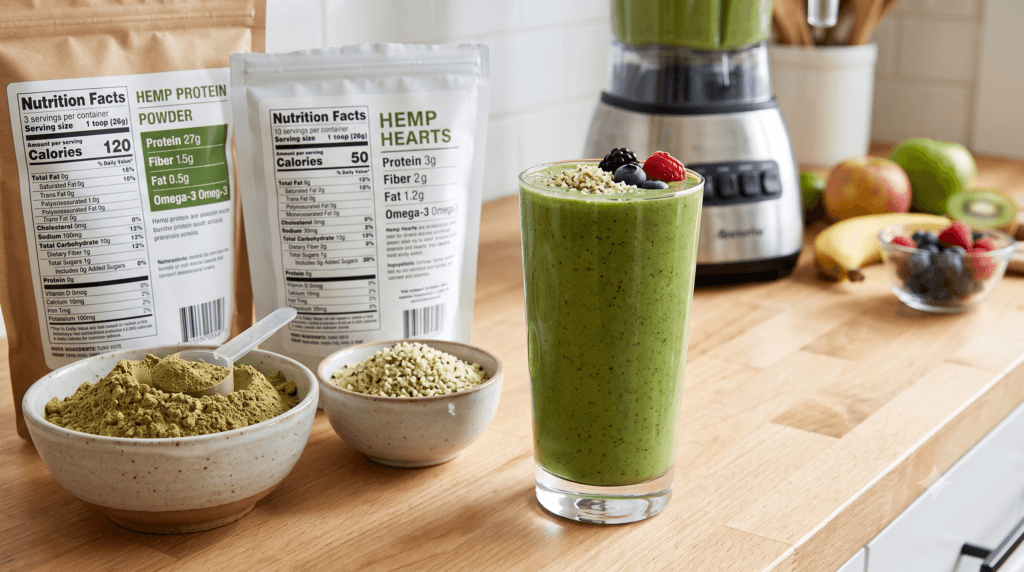
The greener powder is not simply “ground-up hemp hearts”
You want to add more plant protein to a smoothie, oatmeal, or quick breakfast. At the store, one bag contains tender hemp hearts and another contains earthy hemp protein powder. Both come from hemp seeds, both advertise protein, and both may look like a sensible choice.
The useful difference is what happened before the product reached the bag. Hemp hearts are the soft inner seed after the hard hull is removed. Hemp protein powder is generally made after hemp seed oil is pressed out; the remaining seed material is milled and often sifted to create powders with different protein and fiber concentrations.
The quick answer
Choose hemp protein powder when your main job is adding more protein with less of the seed’s original oil. It is usually more protein-concentrated by weight and may provide substantial fiber, but it can taste earthier and feel grittier.
Choose hemp hearts when you want a soft, mild, whole-food-style topping with protein plus more of the seed’s unsaturated fat. They blend smoothly and work well in ordinary meals, but they are not as protein-concentrated as most products sold specifically as hemp protein powder.
Neither is automatically “better.” Compare the Nutrition Facts panels using the same weight, then match the protein, fiber, fat, calories, texture, ingredients, and serving size to the job you actually need the food to do.
If the words hemp hearts, hulled seeds, and whole seeds still feel interchangeable, start with Hemp Hearts vs. Hemp Seeds. That guide explains what the outer hull changes. This comparison begins after the hull question and focuses on hearts versus the more processed protein powder.
Hemp protein powder vs. hemp hearts at a glance
| Question | Hemp hearts | Hemp protein powder |
|---|---|---|
| What is it? | The tender inner seed after most of the hard outer hull is removed. | Usually the milled seed material left after mechanical oil pressing, sometimes sifted or further concentrated. |
| Protein | Meaningful plant protein, but not usually as concentrated as a dedicated protein powder. | Usually higher by weight; the exact percentage changes with processing and formulation. |
| Fat | Higher because the oil-rich center remains largely intact. | Generally lower because much of the oil has been pressed out, although labels vary. |
| Fiber | Usually modest because the fiber-rich hull has been removed. | Can be substantial because fiber remains in the pressed seed material; concentration depends on sifting and processing. |
| Texture and flavor | Soft, tender, mildly nutty, and easy to sprinkle or blend. | Finer but often earthier, drier, and more noticeable or gritty in a drink. |
| Easiest uses | Oatmeal, yogurt, salads, grain bowls, sauces, and smoothies. | Smoothies, shakes, baking mixes, energy bites, and recipes designed for added dry protein. |
| Best first check | Serving weight, protein, fat, calories, ingredients, and storage directions. | Protein per serving, serving weight, fiber, added ingredients, and whether it is plain powder or a flavored blend. |
Why the two foods have different nutrition profiles
The difference is not created by a mysterious additive. It comes mainly from removing and redistributing parts of the seed.
After the hard hull is removed, the soft center still contains its natural protein, oil, and other seed nutrients. That is why hearts are tender and relatively rich, and why their calories are not explained by protein alone.
In the manufacturing process described in FDA GRAS Notice 771, cleaned hemp seeds are cold-pressed to remove oil. The remaining press cake is milled and sifted into powders with different particle sizes and protein grades.
A less-refined powder may retain more fiber and feel coarser. A more concentrated product may provide a higher percentage of protein. “Hemp protein” therefore describes a category, not one identical formula.
A plain one-ingredient powder is not nutritionally identical to a sweetened shake blend containing flavors, gums, oils, sodium, or other proteins. Read the full ingredient list before comparing front-label claims.
Which one gives you more protein?
Hemp protein powder will usually provide more protein for the same weight because much of the seed’s oil has already been removed and the remaining material may be sifted or concentrated. Hemp hearts still provide useful protein, but a larger share of their weight and energy comes from fat.
That does not mean the product with the largest scoop automatically wins. A scoop is a volume measure, and scoop sizes differ. Compare three things:
- Protein per labeled serving: This tells you what the manufacturer expects you to use.
- Protein per equal weight: Converting both products to the same gram weight creates a fairer comparison.
- Protein in the full meal: Milk, soy beverage, yogurt, oats, nut butter, and other ingredients can contribute more protein than the hemp ingredient itself.
A product can contain all essential amino acids and still differ from another protein in amino-acid proportions and digestibility. A human nutrition study of whole hemp seed and hemp seed meal found that processing affected protein digestibility, while lysine limited the protein-quality score used by the researchers. In practical terms, “complete protein” should not be read as “perfect protein” or as proof that a small sprinkle meets a person’s total needs.
Which one gives you more fiber?
Hemp protein powder often provides more fiber than hemp hearts because the hearts have had the fiber-rich hull removed, while pressed seed material used for powder can retain considerable fiber. But powder is not a guaranteed fiber winner. A manufacturer can sift or further process it, and a serving can be smaller than the one you are picturing.
Use the Nutrition Facts panel rather than the color or coarseness of the powder. If a higher-fiber product is new to you, introduce it in a way that fits your usual diet and the package directions. A sudden large increase may be uncomfortable for some people.
Which one fits a smoothie better?
The answer depends on whether your first priority is protein concentration or texture.
Use hemp protein powder when the smoothie has a protein job
- You want a measured protein contribution shown clearly on the label.
- You do not need the additional fat found in a similar weight of hearts.
- You are comfortable balancing an earthy flavor with fruit, cocoa, cinnamon, or another ingredient.
- Your blender and liquid amount can handle a powder that thickens or feels slightly gritty.
Use hemp hearts when the smoothie has a food and texture job
- You prefer a milder flavor and a softer, creamier result.
- You want protein together with more of the seed’s natural unsaturated fat.
- You also use the same bag for oatmeal, salads, yogurt, or grain bowls.
- You are not relying on that one ingredient to carry a large protein target.
Do a small texture test before doubling a serving. More powder can make a drink thicker, drier, or grittier without making it more enjoyable. A smoothie you do not want to finish is not a successful nutrition plan.
The Hemp Food Fit Planner: make the choice in four steps
Use the actual packages in front of you. This planner is designed to turn a broad “Which is healthier?” question into a decision you can verify.
Choose one first priority: concentrated protein, higher fiber, tender whole-food texture, more unsaturated fat, or easy meal topping.
Write down each serving’s weight in grams. Compare protein, fiber, fat, calories, and sodium at the same gram weight when possible.
Powder often fits a measured shake or recipe. Hearts often fit meals where softness, richness, and a mild topping matter.
Use the labeled serving first. Consider taste, fullness, digestive comfort, total meal nutrition, and how quickly you can use the opened package.
Your likely fit: If steps 1 and 2 point to protein concentration with less fat, begin with hemp protein powder. If they point to mild texture, meal versatility, and retaining more seed oil, begin with hemp hearts. If fiber is the goal, let the two labels decide; processing makes assumptions unreliable.
Seven label checks before either bag enters your cart
- Confirm the exact product. “Hemp hearts,” “hulled hemp seed,” and “hemp seed protein powder” describe different forms.
- Check the serving weight. Do not compare one tablespoon with one oversized scoop.
- Read protein, fiber, fat, and calories together. One front-label number cannot describe the whole product.
- Inspect every ingredient. Plain hemp powder differs from a flavored blend with sweeteners, gums, flavors, or added proteins.
- Look at sodium and added sugars. These may come from the formulation rather than the hemp ingredient.
- Follow storage directions. Close the package tightly and protect it from heat and moisture; refrigerate when the manufacturer instructs you to do so.
- Ignore CBD-style imagery. Hemp seed foods should not be purchased with the expectation that they deliver cannabidiol effects.
Do hemp hearts or hemp protein powder contain CBD or THC?
Hemp seeds do not naturally contain meaningful CBD or THC. Trace amounts can reach seed-derived ingredients when seeds contact flowers, leaves, or resin during harvesting and processing. The FDA states that the hemp seed-derived ingredients evaluated in its GRAS notices—including hulled hemp seed and hemp seed protein powder—contain only trace amounts and are not capable of making consumers feel high.
That does not turn every product bearing a hemp leaf into the same food. CBD oil contains a deliberately added hemp extract and raises different questions about dose, medications, THC, and laboratory testing. If a label is vague, use Hemp Seed Oil vs. CBD Oil to separate seed-derived foods from cannabinoid products.
Who should slow down and check first?
For most readers, the practical question is how the food fits the rest of the diet. Individual guidance matters more when a clinician has directed you to limit or monitor protein, phosphorus, potassium, fiber, fat, or total calories; when a digestive condition makes concentrated fiber difficult; or when a food allergy is suspected.
Allergic reactions to hemp seed-derived ingredients have been reported, although hemp is not one of the nine major food allergens required to receive special emphasis under U.S. federal labeling rules. Stop eating a product and seek appropriate care if symptoms suggest an allergic reaction. Anyone with a medically directed diet should take the actual label—not a general web chart—to a physician or registered dietitian.
Storage is part of the value calculation
Hemp hearts retain more of the seed’s oil, so warmth, light, oxygen, and time can work against quality after the bag is opened. Hemp protein powder is generally lower in fat, but it still needs dry, tightly closed storage according to its label.
Buy the amount you can realistically use. Check the seal and best-by date, close the package promptly, use a clean dry utensil, and follow any refrigeration instructions. A stale, harsh, paint-like, unusually bitter, moldy, or otherwise wrong smell or flavor is a reason to stop rather than hide the product in a smoothie. For a closer look at the seed’s oil and heat sensitivity, see Can You Cook With Hemp Seed Oil?.
Four-question knowledge check
Choose your answer before opening each explanation.
1. Is hemp protein powder simply hemp hearts ground into a fine flour?
Answer: Usually no. In the process described in FDA GRAS Notice 771, hemp seeds are pressed to remove oil, and the remaining seed material is milled and sifted. Products can then be processed to different protein grades.
2. Which product is usually more protein-concentrated by weight?
Answer: Hemp protein powder. Removing much of the oil and processing the remaining seed material usually raises protein’s share of the finished product. Confirm the exact amount on the label.
3. Do hemp hearts always contain more fiber than hemp protein powder?
Answer: No. Hemp hearts have had the fiber-rich hull removed. Protein powder can retain considerable fiber, although sifting and further concentration make products vary.
4. Does “complete protein” mean a spoonful meets every protein need?
Answer: No. Hemp protein contains all essential amino acids, but the amounts, digestibility, serving size, and the rest of the diet still matter. In protein-quality research, lysine was the limiting amino acid.
Frequently asked questions
Can I use hemp hearts instead of hemp protein powder?
Sometimes, but not as a one-for-one nutritional or recipe substitution. Hearts add more fat and moisture and generally less concentrated protein. Powder is drier, more absorbent, and can change a recipe’s texture. Compare labels and adjust recipes cautiously.
Is hemp protein powder better for weight loss?
No single hemp ingredient produces weight loss. Protein and fiber can affect fullness, but total eating patterns, serving size, energy intake, activity, sleep, health conditions, and medications all matter. Choose a product you can use in a realistic meal rather than treating it as a shortcut.
Which is better after a workout?
Hemp protein powder usually makes it easier to add a measured amount of protein, while hearts contribute protein with more fat. The better choice depends on the full meal, the total protein amount, timing, personal tolerance, and any training or clinical nutrition plan—not the hemp ingredient alone.
Why does hemp protein powder taste gritty?
Retained fiber, particle size, and formulation can create an earthy flavor and a dry or gritty texture. More liquid, longer blending, and using a smaller initial serving may help. A different protein grade or product can also behave differently.
Can you bake with hemp protein powder?
Many hemp protein powders are intended for baked goods, but powder can absorb liquid, darken color, and change density or flavor. Follow the package guidance and begin with a recipe designed for added protein instead of replacing all flour.
Will hemp protein powder or hemp hearts make me high?
No. Hemp seeds do not naturally contain THC or CBD, and the FDA states that trace amounts in properly manufactured seed-derived ingredients covered by its notices are not capable of producing a high.
The bottom line
Hemp protein powder and hemp hearts begin with the same seed, but processing gives them different jobs.
Protein powder usually offers more protein concentration and often more fiber with less of the seed’s original oil. Hearts offer a softer, milder food with protein, more unsaturated fat, and easy meal-to-meal versatility. Neither label can tell you which one belongs in your kitchen until you decide what the meal needs.
Start with the job. Compare equal weights. Read the whole label. Then choose the form you will actually enjoy and use consistently.
What is your hemp ingredient supposed to do?
Are you trying to raise a smoothie’s protein, add fiber, create a softer breakfast topping, or replace another ingredient? Share the job—and the protein, fiber, fat, and serving weight printed on your bag—in the comments. That information makes the comparison useful without turning one product into a universal winner.
Authoritative sources and further reading
- U.S. Food and Drug Administration: Hemp seed-derived ingredients for use in human food
- U.S. Food and Drug Administration: GRAS Notice No. 771 response for hemp seed protein powder
- U.S. Food and Drug Administration: Food allergies and the nine major allergens
- USDA FoodData Central: Search and compare food composition data
- Journal of Agricultural and Food Chemistry: Evaluating protein quality from hemp seed products
Nutrition note: This article provides general food and nutrition education. It does not diagnose, treat, or replace individualized advice from a physician, registered dietitian, allergist, or other qualified professional. Needs can differ when allergies, digestive disorders, kidney disease, medically directed diets, pregnancy, childhood nutrition, or other health considerations are involved.