

Hemp nutrition · Daily-use guide · Evidence checked
The scoop came inside the bag, so using one every morning can feel like the obvious routine. But a manufacturer’s scoop measures powder—it does not measure what your body or the rest of your diet needs.
Hemp protein can be a convenient food ingredient. The more useful daily question is whether your actual portion fills a real gap, fits the complete meal, agrees with your digestion, and comes from a product you have checked.
Quick answer: Can you take hemp protein every day?
For many adults, food-grade hemp protein can fit into an everyday eating pattern. However, there is no universal hemp-protein dose or required number of scoops per day. The right role depends on your total protein intake, the powder’s protein and fiber per serving, the other ingredients, your comfort, and any individual medical nutrition needs.
Begin with the label and the job you want the powder to do. Count what it contributes to the whole day, rather than treating “one scoop” as a daily prescription.
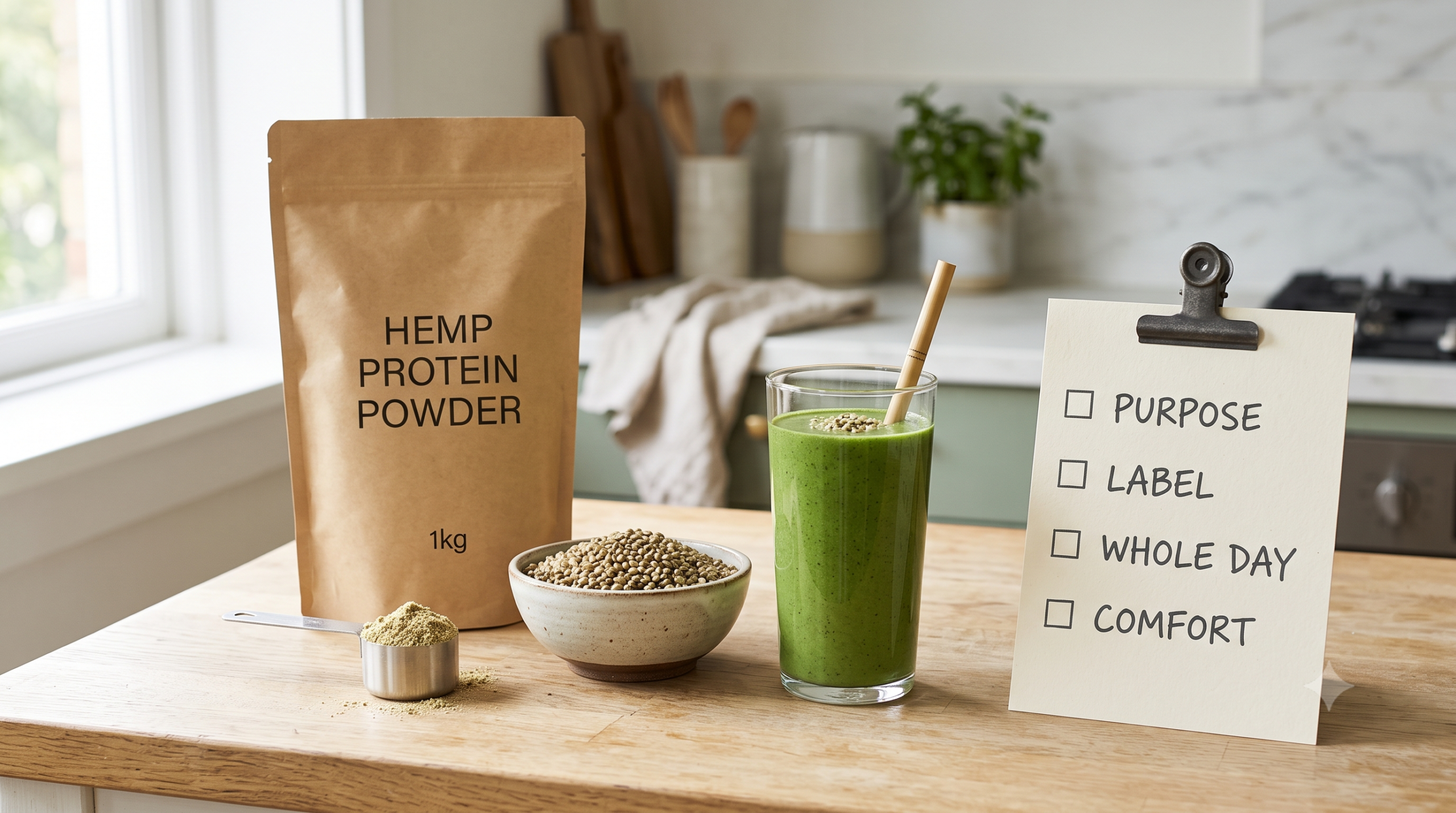
How much hemp protein powder per day makes sense?
A sound answer does not begin with a scoop count. It begins with your reason for using the powder and the protein already coming from meals, snacks, and drinks.
The current Recommended Dietary Allowance for protein is 0.8 grams per kilogram of body weight per day for generally healthy adults. That is a population reference intended to cover basic needs—not a hemp-powder target, a ceiling, or an individualized sports plan.[2] Needs can change with age, body size, pregnancy, activity, training, illness, recovery, and other circumstances.
Athletes are a clear example. NIH’s Office of Dietary Supplements summarizes higher protein ranges used in sports guidance, while also noting that many athletes can meet their needs through food and use protein supplements only when helpful.[3] Research or guidance about total daily protein should not be quietly converted into a recommendation for that many grams of hemp powder.
The daily serving decision
Name the job
Breakfast ingredient, snack, convenience, or support for a training plan?
Count the day
Include food and drinks before deciding a powder must fill a gap.
Read the label
Use grams of powder, protein, fiber, calories, ingredients, and allergens.
Review the fit
Notice comfort, meal quality, convenience, and whether the routine still has a purpose.
USDA’s food-group guidance makes the same broader point: the amount and mix of protein foods depend on individual characteristics, and variety matters.[4] A powder may make a routine easier, but it does not make beans, lentils, soy foods, nuts, seeds, eggs, dairy, seafood, or other suitable protein foods nutritionally irrelevant.
One scoop, half a scoop, two scoops—or none?
The FDA states that a Nutrition Facts serving size reflects the amount people typically consume; it is not a recommendation of how much to eat.[5] “One scoop” is even less universal because scoop dimensions and powder density differ among products.
| Option | When it may fit | What to inspect | Common mistake |
|---|---|---|---|
| A fraction of the labeled serving | You want a smaller protein or fiber contribution, or you are testing texture in a recipe. | Multiply every label value by the fraction used. | Counting the full serving’s protein after using only part of it. |
| One labeled serving | The amount fits the meal, your overall plan, and the preparation directions. | Serving weight in grams—not just the included scoop. | Assuming the serving is a personal daily recommendation. |
| More than one labeled serving | A qualified plan or carefully assessed diet calls for more, and the whole recipe remains suitable. | Protein, fiber, calories, sodium, minerals, added ingredients, and comfort. | Doubling only the protein number while forgetting everything else doubles too. |
| No powder that day | Food already meets the practical need, or the powder adds cost or discomfort without solving a problem. | Dietary variety and whether convenience is actually needed. | Believing a daily streak is required for hemp protein to “work.” |
On a phone, swipe the table sideways. These are decision contexts—not prescribed portions.
Do the label math in grams
Suppose a fictional product lists a 30-gram serving with 15 grams of protein, 7 grams of fiber, and 120 calories. If you use 20 grams of powder, you used two-thirds of a labeled serving.
| Fictional label item | Per 30 g serving | From 20 g powder |
|---|---|---|
| Protein | 15 g | 10 g |
| Fiber | 7 g | About 4.7 g |
| Calories | 120 | 80 |
The values are invented to demonstrate proportional math. They do not describe a specific product or recommend a daily intake.
Then add the rest of the smoothie or meal. The earlier guide, Can Hemp Protein Replace a Meal?, shows why powder mixed with water and a complete breakfast are not automatically the same thing.
Four checks before hemp protein becomes an everyday habit
1. Is it filling a measured gap?
Write down the protein-containing foods you normally eat before adding powder. If the powder solves a convenience problem, say that plainly. A useful role is better than a vague belief that more protein must be better.
2. What else comes with the protein?
Hemp powders can retain very different amounts of fiber, fat, minerals, and seed material. Flavored formulas may add sweeteners, gums, or other protein sources. Compare the complete panels, not the green front label.
3. Does the routine feel comfortable?
A sudden increase in fiber can change gas, fullness, or bowel habits. NIDDK advises increasing fiber gradually and drinking enough liquid to help fiber work as intended.[6]
4. Has the exact product earned trust?
Check the seal, lot, date, ingredient list, allergen information, storage directions, and any batch-specific testing the seller provides. “Plant-based” and “clean” are marketing descriptions, not contaminant reports.
The daily pattern matters more than a single shake
If hemp protein repeatedly replaces a varied meal, inspect what disappears with that meal. A larger protein number does not automatically restore energy, essential fats, vitamins, minerals, fruit, vegetables, or dietary variety.
If muscle support is the goal, remember that hemp and whey do not provide equal protein or leucine scoop for scoop. The site’s hemp protein vs. whey comparison explains the difference without declaring one powder best for everyone. If the claim on your bag says “complete protein,” use the complete-protein guide to understand what that phrase does—and does not—mean.
More powder can also mean much more fiber
A smoothie may combine hemp powder, oats, berries, seeds, a sweetener, and a plant beverage. When discomfort appears, the powder is only one possible contributor. The hemp protein gas and bloating checklist helps you review timing, portion, and the complete recipe one variable at a time.
Quality checks do not become optional with daily use
A detection on a laboratory report is not automatically proof of danger, and a one-word “pass” is not enough information to evaluate exposure. Match any report to the product and batch, check the units, and translate the result to the amount you actually use. Follow the heavy-metals label guide for the calculation.
Daily use also makes ordinary storage easy to overlook. A package can remain in the pantry long enough for odor, moisture, damaged seals, or an expired date to matter. Use the hemp protein storage checklist before masking an odd smell in a flavored smoothie.
When a universal online serving guide is not enough
Personalized help matters when protein, fiber, fluids, potassium, phosphorus, energy, or another nutrient is being medically managed. People with chronic kidney disease, for example, may need their protein amount and sources adjusted over time with a dietitian or healthcare professional.[7] The appropriate plan can differ for someone receiving dialysis.
Seek individualized guidance if you are pregnant or breastfeeding, planning the diet of a child, dealing with unintended weight change or difficulty eating, following a prescribed diet, recovering from illness or surgery, or managing a condition that changes nutrition needs. Do not use a generic powder calculator to override a clinical plan.
Persistent diarrhea, constipation, pain, vomiting, blood in the stool, dehydration, unexplained weight loss, or symptoms that repeatedly return deserve professional assessment. A food diary can document a pattern; it cannot diagnose its cause.
Put the label to work
Your P.I.C.K. daily-use planner
Move through one stage at a time: Pick the job, Inspect the labels, Calculate the serving, Keep useful notes. Entries are not saved after you leave. The calculator describes what the powder contributes; it does not set a target or decide whether the portion is right for you.
Pick the job
Give the powder a specific purpose before choosing a portion.
Inspect the label
Complete these checks using the exact package in your hand.
Calculate what your portion contributes
Copy the per-serving numbers from the label, then enter the amount you actually use.
Keep useful notes
Record the context so a later change is easier to interpret.
Check what you learned
Four-question interactive knowledge check
Choose an answer before opening each panel.
1. The serving on a hemp protein label is: A) a personal daily prescription, or B) the basis for the nutrition values shown?
Answer: B. FDA explains that a serving size is not a recommendation of how much to consume. Use it to interpret the panel, then assess the portion in context.
2. A 30 g serving lists 15 g protein. What does 20 g of powder contribute: A) 10 g, or B) 15 g?
Answer: A, 10 grams. Twenty grams is two-thirds of the labeled serving, so multiply the label value by two-thirds.
3. If you double the powder, only the protein changes: A) true, or B) false?
Answer: B, false. Fiber, calories, sodium, minerals, and every other listed component rise with the amount used.
4. Using hemp protein every day guarantees a better diet: A) true, or B) false?
Answer: B, false. Its value depends on the role it plays, the exact product, the complete diet, and individual needs. Daily use is not automatically necessary or superior.
Frequently asked questions
Is it safe to drink hemp protein every day?
Food-grade hemp seed protein can fit an everyday eating pattern for many adults, but “daily” does not establish that a specific product or portion suits everyone. Review the label, ingredients, total diet, symptoms, product quality, and any medical nutrition needs.
How many scoops of hemp protein should I take per day?
There is no universal scoop count. Scoops and products differ, and total protein needs are individual. Weigh the powder if precision matters, calculate what it contributes from the label, and use it only for the portion of your plan it actually fills.
Can I use hemp protein twice a day?
Two servings multiply every nutrient and ingredient in the powder, not only protein. Before making that routine, inspect the complete day, fiber load, product directions, comfort, food variety, and whether a qualified plan calls for it.
Does hemp protein contain CBD or make you high?
Plain hemp seed protein is a seed-derived food ingredient, not CBD oil. FDA says hemp seeds do not naturally contain THC or CBD, although trace amounts may occur through contact with other plant material. Read the complete ingredient list rather than relying on the word “hemp.”
Can daily hemp protein cause gas or constipation?
A fiber increase can change gas or bowel habits for some people, but the full recipe, portion, liquid, sweeteners, and other foods may also matter. Increase fiber gradually, follow appropriate hydration guidance, and seek care for persistent or concerning symptoms.
Is hemp protein enough for building muscle?
Hemp contributes protein, but training response depends on total intake, protein quality, distribution, energy intake, and resistance training. Hemp is generally less protein- and leucine-dense than whey, and one scoop does not represent the complete day.
Bottom line: make the routine earn its place
You can use hemp protein every day without pretending that everyone needs to. Give the powder a clear job, calculate the portion from the real label, count the whole meal and day, and pay attention to comfort and product quality.
If a smaller portion does the job, the scoop does not have to be full. If ordinary food already covers the need, skipping the powder is not a failure. A good routine is the one that remains useful after the marketing language is removed.
Sources and evidence notes
- FDA: Hemp Seed-Derived Ingredients for Use in Human Food — hemp seed, hemp seed protein powder, hemp seed oil, and trace cannabinoid context.
- Scientific Foundation for the Dietary Guidelines for Americans, 2025–2030 — current protein RDA context and limits of a single population reference.
- NIH Office of Dietary Supplements: Exercise and Athletic Performance — protein, athletic needs, food-first context, and limits of supplements.
- USDA MyPlate: Protein Foods — individual variation and dietary protein variety.
- FDA: Serving Size on the Nutrition Facts Label — serving sizes describe typical consumption and are not intake recommendations.
- NIDDK: Eating, Diet, and Nutrition for Constipation — gradual fiber increases and liquids.
- NIDDK: Healthy Eating for Adults With Chronic Kidney Disease — individualized protein amounts and sources.
Evidence and links checked September 4, 2026. This article provides general food and nutrition education, not individual medical advice. It does not establish a hemp-specific daily dose or upper limit.
What job does hemp protein do in your routine?
Is it a breakfast ingredient, a quick snack, part of a training plan, or something you use only occasionally? Share the label detail or portion lesson that surprised you in the comments. Please keep private medical information out of public comments.