
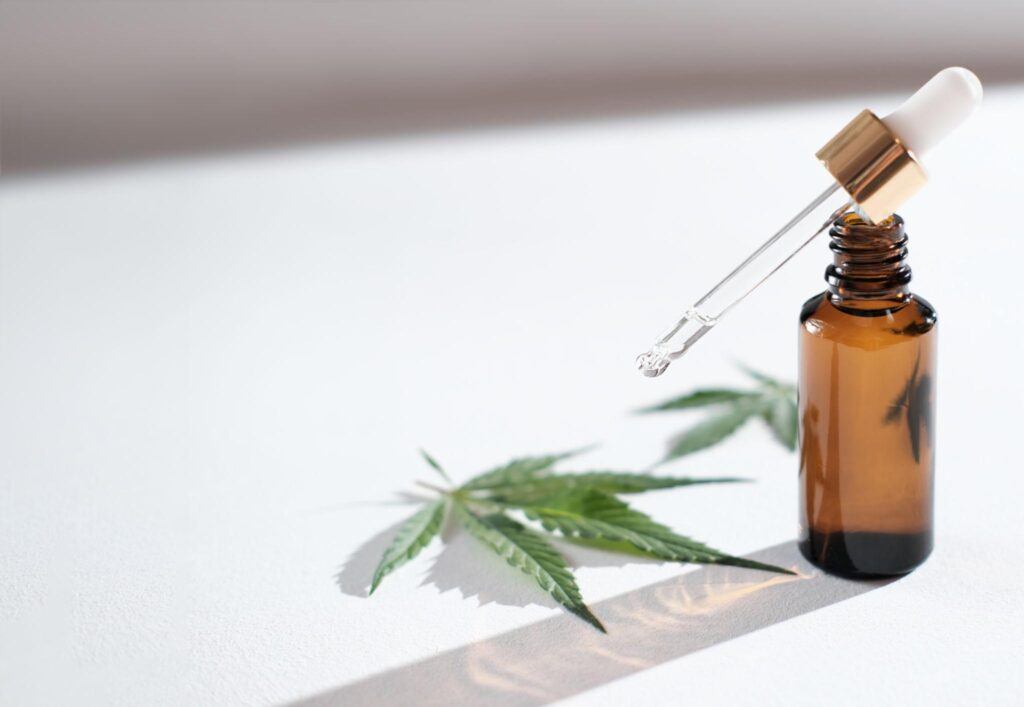
CBD-related liver changes may not produce immediate symptoms, making accurate dosing, product testing, and medical guidance important.
The liver concern CBD users may not be able to feel
CBD is often marketed as gentle, natural, and suitable for everyday wellness. A growing body of research, however, shows that oral CBD can affect liver enzymes in some people—sometimes without producing noticeable symptoms.
Plain-English guidance
No product endorsements
Can CBD affect your liver?
Yes, CBD can raise liver enzymes in some users, particularly at higher oral amounts or when combined with certain medications. The risk does not appear to be identical for every person, dose, or product.
In a recent FDA-led randomized trial, healthy adults received approximately 250 to 550 milligrams of oral CBD per day for four weeks. Eight CBD participants—an estimated 5.6%—developed ALT levels greater than three times the laboratory’s upper limit of normal. No participants in the placebo group reached that threshold.[1]
The participants with elevated enzymes did not experience clinical liver symptoms during the study, and their enzyme levels returned to normal after CBD was discontinued. That is reassuring, but it also illustrates why a person cannot rely only on how they feel.
What did the recent FDA CBD study find?
The randomized, double-blind, placebo-controlled trial enrolled 201 healthy adults. Participants assigned to CBD received 2.5 milligrams per kilogram of body weight twice daily for 28 days. Depending on body weight, the daily amount ranged from approximately 250 to 550 milligrams.[1]
Healthy adults were enrolled and randomized to receive CBD or placebo.
Estimated proportion of CBD participants whose ALT exceeded three times the upper limit of normal.
Placebo participants who experienced an enzyme elevation meeting the study’s primary threshold.
Seven CBD participants met the study’s withdrawal criteria for potential drug-induced liver injury. The enzyme changes occurred without clinical symptoms, did not result in clinically significant changes in liver function during the trial, and returned to normal within one to two weeks after CBD was stopped.[1]
What the findings mean—and what they do not mean
| What the evidence supports | What the evidence does not prove |
|---|---|
| Oral CBD can raise liver enzymes in a portion of otherwise healthy adults. | That every person who uses CBD will develop liver damage. |
| Liver-enzyme changes can occur without immediate symptoms. | That feeling normal guarantees that liver tests are normal. |
| Daily amount, other medications, and individual health factors deserve attention. | That one universal amount is safe or unsafe for every adult. |
| Higher-dose prescription CBD has a documented, dose-related liver-enzyme risk. | That prescription-study percentages apply directly to lower-dose retail products. |
| Retail product accuracy matters when estimating actual exposure. | That “hemp-derived,” “organic,” or “lab tested” guarantees a predictable dose. |
Many consumer CBD servings are lower than the amounts used in the FDA-led study. However, lower-dose evidence remains incomplete, and some consumers combine multiple products, take repeated servings, or use highly concentrated oils without calculating their total daily intake.
The National Institutes of Health’s LiverTox resource previously described lower amounts commonly found in over-the-counter products as generally well tolerated, while also emphasizing that studies of lower-dose retail CBD and liver-test abnormalities were limited.[4] The newer FDA trial adds useful evidence but still does not establish a universally safe daily limit.
Why prescription CBD evidence matters
Epidiolex is an FDA-approved purified CBD prescription drug used for seizures associated with specific conditions. It is not interchangeable with an unapproved retail CBD product, but its prescribing information provides some of the strongest controlled safety data available for cannabidiol.
In controlled studies cited in the current prescribing information, ALT elevations above three times the upper limit of normal occurred in approximately 12% to 13% of Epidiolex-treated patients, compared with 1% of placebo patients. Risk was generally dose-related and was higher among people taking valproate, with clobazam contributing additional risk in some groups.[2]
These patients often received much larger weight-based amounts than typical casual CBD users and had serious seizure conditions requiring other medications. The percentages should therefore not be copied directly onto ordinary retail use.
Who should be especially cautious?
No simple checklist can calculate an individual person’s risk. These circumstances should, however, prompt a conversation with a physician or pharmacist before regular oral CBD use.
Existing liver concerns
A history of liver disease, hepatitis, fatty liver disease, cirrhosis, abnormal liver tests, or impaired liver function may change how a substance is processed.
Higher or increasing amounts
Concentrated tinctures and multiple daily servings can make total exposure much higher than the front label initially suggests.
Prescription medication use
CBD can affect drug-processing pathways, while some medicines carry liver warnings of their own. Valproate is a documented concern with prescription CBD.
Several supplements at once
Combining CBD with herbs, supplements, or other cannabinoids makes it harder to determine which ingredient caused a side effect or laboratory change.
Unclear product strength
A missing, outdated, or mismatched Certificate of Analysis creates uncertainty about the actual CBD, THC, and contaminant content.
Long-term daily use
The FDA continues to identify unanswered questions about sustained daily exposure and the intake level at which known risks become more likely.
Do not stop, reduce, or replace a prescribed medication because you want to begin CBD. Review the specific product, listed serving, actual daily amount, medication list, and health history with the prescriber or a pharmacist.
For a deeper explanation, read Can CBD Interact With Medications? What Hemp Users Need to Know.
Possible liver-injury symptoms deserve prompt attention
Early liver-enzyme elevations may not cause symptoms. When drug-induced liver injury does produce warning signs, they may include:
- Yellowing of the skin or whites of the eyes
- Dark or brown urine
- Pale or clay-colored stools
- Persistent nausea or vomiting
- Loss of appetite
- Unusual fatigue or weakness
- Abdominal pain, particularly on the upper-right side
- Persistent itching
- Confusion or other significant mental changes
Contact a qualified medical professional promptly if these symptoms develop. Severe pain, confusion, repeated vomiting, fainting, or rapidly worsening yellowing warrants urgent medical evaluation. Many conditions besides CBD can cause these symptoms, so do not try to diagnose the cause at home.[5]
Should CBD users ask for liver blood tests?
There is no universal liver-testing schedule established for every consumer using a nonprescription CBD product. Whether testing is appropriate depends on the amount used, frequency, health history, symptoms, other medicines, and the reason for using CBD.
A clinician may consider tests such as ALT, AST, alkaline phosphatase, and bilirubin. ALT and AST can help identify liver-cell injury, while bilirubin and other measurements provide additional information. One abnormal value does not establish that CBD caused the result; infections, alcohol, metabolic conditions, medications, supplements, strenuous activity, and other factors may also affect testing.
The Epidiolex prescription label includes a formal monitoring schedule because it is an approved drug used at medically supervised doses. Consumers should not copy that schedule as a substitute for individualized care.[2]
Bring these details to the conversation
- The CBD product package or a clear photograph of every label panel
- The exact number of milligrams used per serving and per day
- How many days or months you have used the product
- The batch-specific Certificate of Analysis
- All prescriptions, over-the-counter medicines, vitamins, herbs, and supplements
- Alcohol use and any recent changes in drinking patterns
- Previous liver-test results or history of liver disease
- Any symptoms that began after starting or increasing CBD
Product accuracy changes the safety calculation
A bottle may advertise a large total such as “3,000 mg” while providing a much smaller amount per milliliter or dropper. Conversely, an inaccurately labeled product may contain more CBD than expected. Consumers who use several gummies, tinctures, drinks, or capsules can also underestimate their combined daily amount.
Before estimating your exposure, verify:
- The total CBD claimed for the entire container.
- The milligrams of CBD claimed per serving.
- The number and size of servings actually used.
- Whether the laboratory report matches the product and batch.
- Whether measured CBD reasonably matches the label.
- Whether THC and relevant contaminants were also tested.
The site’s complete walkthrough, How to Read a CBD Certificate of Analysis Before You Buy, explains how to check the batch number, potency units, THC results, laboratory identity, detection limits, and contaminant panels.
A safer decision process before using CBD regularly
- Identify the reason you are considering CBD. Do not allow marketing to replace a diagnosis or delay proven treatment.
- Review your medications and health conditions. A physician or pharmacist needs the complete list, not only the prescriptions that seem related.
- Calculate the true daily amount. Include every CBD-containing product used during the same day.
- Check the matching laboratory report. Product type and batch number should match the item in your hand.
- Avoid rapid, unsupervised increases. More CBD can mean more exposure and potentially more side effects; it does not guarantee greater benefit.
- Pay attention to new symptoms. Record when they began and whether they followed a dose or product change.
- Reassess whether the product is helping. Continuing indefinitely without a clear benefit still exposes you to cost, uncertainty, and possible risk.
Knowledge check: What does the liver research really tell us?
Choose your answer before opening each explanation.
1. If CBD affects the liver, will the user always feel sick?
No. Participants with significant liver-enzyme elevations in the recent FDA-led trial did not experience clinical liver symptoms during the study. Blood-test changes can occur before a person notices a problem.
2. Does the FDA trial prove that a 10- or 25-milligram CBD serving damages the liver?
No. The study used approximately 250 to 550 milligrams per day for 28 days. Its results cannot determine the exact risk of substantially lower amounts, although they reinforce that cannabidiol is biologically active.
3. Is a “natural” CBD product automatically easier on the liver?
No. “Natural” describes a marketing or sourcing concept; it does not establish dose accuracy, contaminant control, medication compatibility, or liver safety.
4. Can one abnormal ALT result prove that CBD caused liver injury?
No. ALT may rise for many reasons. A healthcare professional should interpret the complete test pattern, symptoms, health history, medication and supplement use, alcohol exposure, and other possible causes.
The bottom line
CBD can affect liver enzymes, and those changes may occur without obvious symptoms. The clearest risks have been documented with medically supervised, higher-dose prescription CBD, but newer research shows that amounts reported by some consumers can also produce meaningful enzyme elevations in a minority of healthy adults.
This does not justify panic or the claim that every CBD product damages the liver. It does justify a more careful question than “Is CBD natural?”
Ask how much CBD you are actually taking, whether the label and laboratory report agree, which medications and supplements you use, whether you have existing liver concerns, and whether regular use is producing a clear benefit.
Most importantly, do not wait for dramatic symptoms to begin asking safety questions. Bring the product, batch report, daily amount, and medication list to a qualified physician or pharmacist before making CBD part of a long-term routine.
Continue learning about CBD safety
CBD and medications
Learn why CBD can change how the body processes certain medicines.
CBD and drowsiness
Understand alertness, driving, alcohol, and sedating medications.
Read a CBD laboratory report
Check potency, THC, batch numbers, and contaminant results.
Compare CBD product types
See how full-spectrum, broad-spectrum, and isolate differ.
Beginner’s hemp guide
Start with the differences among hemp, CBD, and hemp seed products.
What the evidence supports
Separate established facts from natural-wellness marketing.
Frequently asked questions
How much CBD can affect the liver?
No universal threshold has been established for every person. The recent FDA-led trial used approximately 250 to 550 milligrams per day. Prescription studies have shown a dose-related risk at higher weight-based amounts. Risk at lower consumer amounts remains less certain and may depend on medications, liver health, product accuracy, and individual metabolism.
Can a small daily CBD amount harm the liver?
The available evidence cannot guarantee that every small amount is risk-free, but the strongest liver-enzyme signals have generally appeared at higher daily exposure. Research on long-term, low-dose consumer use remains limited.
Can CBD gummies affect liver enzymes?
Yes, an oral gummy can deliver CBD to the body, although the actual exposure depends on the measured CBD amount, number of gummies, formulation, frequency, and individual absorption. A gummy format does not eliminate CBD’s potential biological effects.
Is CBD oil harder on the liver than a topical cream?
Oral products generally create more systemic exposure than a product intended to remain on the skin, but topical formulations, application amounts, skin condition, added ingredients, and product accuracy vary. Do not assume every topical stays entirely local or is automatically risk-free.
Does hemp seed oil cause the same liver concern as CBD oil?
Hemp seed oil and CBD oil are different products. Hemp seed oil is pressed from seeds and should not naturally contain meaningful CBD. A product formulated with extracted CBD presents a different exposure. Read the ingredient list and cannabinoid report rather than relying on the phrase “hemp oil.”
Can CBD be used by someone with fatty liver disease?
That decision requires individualized medical guidance. A person with fatty liver disease already has a condition affecting the liver and should discuss CBD, the intended amount, medication list, alcohol use, and recent blood-test results with a qualified clinician.
What liver tests might a doctor discuss?
A clinician may consider ALT, AST, alkaline phosphatase, bilirubin, and other measurements depending on the circumstances. These results must be interpreted together because an abnormal value may have many possible causes.
Should I stop CBD immediately if a liver test is abnormal?
Contact the clinician who ordered or reviewed the test. Do not independently change a prescribed CBD medicine or other prescription treatment. The appropriate response depends on the result, symptoms, amount used, other medicines, and alternative causes.
Sources and further reading
- U.S. Food and Drug Administration: CDER Investigators Address the Safety of CBD in a Randomized Trial
- U.S. Food and Drug Administration: Epidiolex Prescribing Information, 2025
- U.S. Food and Drug Administration: What to Know About Products Containing Cannabis and CBD
- National Institute of Diabetes and Digestive and Kidney Diseases: LiverTox—Cannabidiol
- MedlinePlus: Drug-Induced Liver Injury