

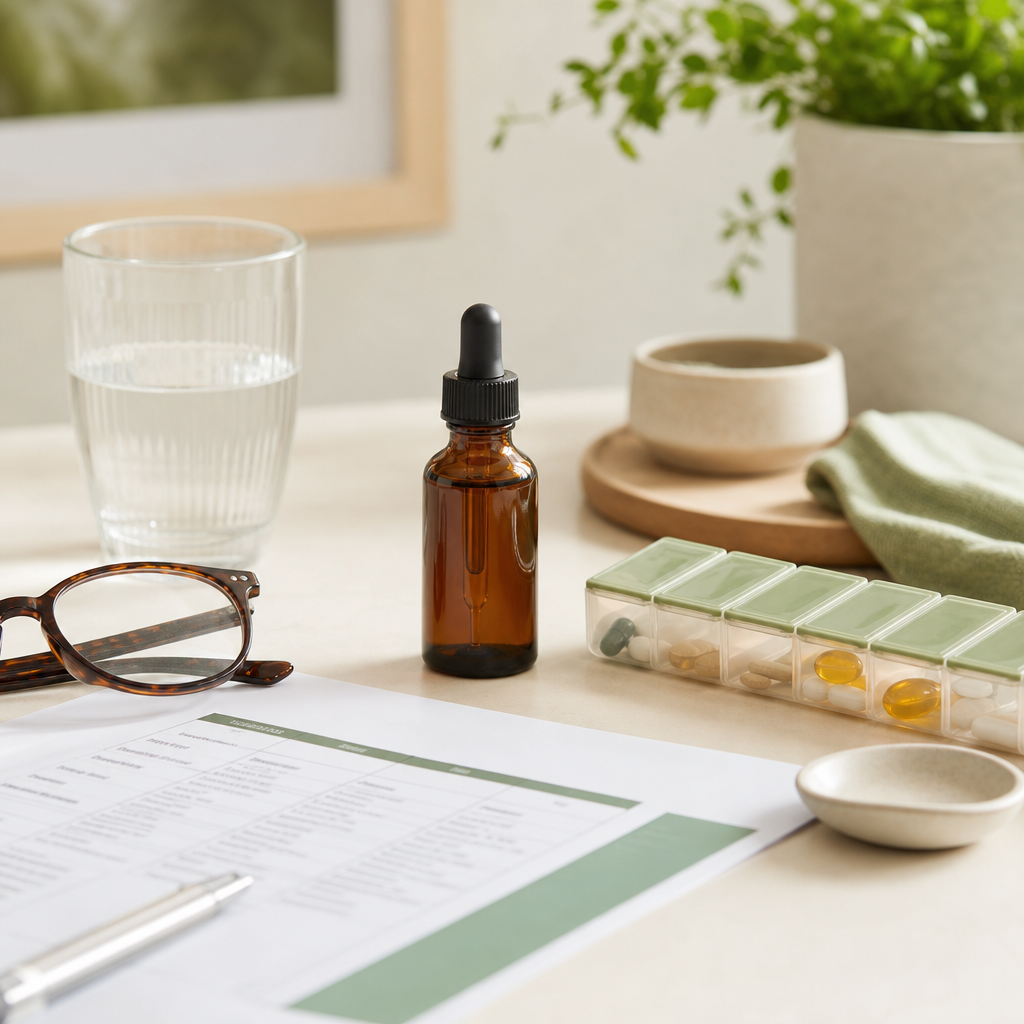
Hemp-derived CBD may be sold beside everyday wellness products, but “natural” does not mean interaction-free. Before combining CBD with a prescription, over-the-counter medicine, or supplement, take one important step: let a qualified healthcare professional review the complete combination.
Yes. CBD may increase or decrease the effects of certain medicines.
A pharmacist can review prescriptions, nonprescription drugs, and supplements together.
Do not stop or adjust prescribed medication on your own to make room for CBD.
The Quick Answer
CBD can interact with medications. The U.S. Food and Drug Administration says CBD may change the effects of other medicines, while other medicines may change how much CBD can be used safely. An interaction may increase side effects, reduce a medicine’s effectiveness, or create a need for closer monitoring.
The safest response is not to guess from an online list. Bring the exact CBD product, dose information, and a complete medication list to a physician or pharmacist before starting it.
CBD often appears in oils, gummies, capsules, drinks, creams, and products marketed for sleep, stress, soreness, or general wellness. Because many of these products are sold without a prescription, it is easy to place them mentally in a different category from “real medicine.” The body does not make that distinction.
Cannabidiol is biologically active. It can cause side effects, affect alertness, influence liver-related processes, and interact with other substances. That does not mean every combination is dangerous. It means the combination deserves the same honest review you would give any other supplement or medication.
Three Facts Worth Knowing First
Nonintoxicating Does Not Mean Inactive
CBD generally does not produce the classic “high” associated with THC, but it still has effects in the body and can cause drowsiness, digestive symptoms, changes in alertness, and other unwanted effects.
Store-Bought CBD Is Not the Same as an Approved Drug
The FDA has approved one prescription drug containing purified CBD for specific seizure disorders. That approval does not automatically establish the safety, dose, purity, or effectiveness of retail CBD oils, gummies, or wellness products.
The Label May Not Tell the Whole Story
Retail products vary in formulation and quality. A label may not fully communicate the actual cannabinoid content, contaminants, serving size, or other active ingredients that could affect risk.
An Interaction Can Work in Either Direction
CBD may affect another medicine, or another medicine may affect CBD. The result can be too much effect, too little effect, more side effects, or a need for medical monitoring.
Why Can CBD Interact With Medication?
Many medicines must be absorbed, processed, transported, and cleared by the body in a predictable way. CBD may influence parts of that process. The exact effect depends on the CBD dose, route, formulation, timing, the other medicine, the person’s liver function, age, health conditions, and additional substances being used.
A Simple Way to Picture the Interaction
This is not a complete pharmacology lesson, but it explains why “I only take a little” is not enough to rule out risk.
CBD Enters the System
An oil, capsule, gummy, drink, or other ingestible product introduces an active compound the body must process.
Processing May Change
CBD may affect enzymes or pathways involved in processing other substances. Other medicines may also change CBD exposure.
Drug Effects May Shift
A medicine may remain in the body differently, work less effectively, or contribute to stronger side effects.
Research involving the FDA-approved CBD medicine Epidiolex has established that clinically meaningful interactions can occur. However, those findings should not be turned into a homemade dosing formula for retail CBD. Prescription CBD is standardized and medically monitored; consumer products may differ considerably.
The right question is not, “Is CBD natural?” It is, “What happens when this active product is combined with everything else I take?”
Who Should Be Especially Cautious?
Anyone who takes medication should disclose CBD use, but some situations make professional review especially important. The groups below are not a complete interaction list and should not be used to self-clear a product.
People Taking Several Medications
The more prescriptions, over-the-counter products, and supplements involved, the harder it becomes to predict the combined effect without reviewing the full list.
People Using Medicines Requiring Close Monitoring
Some medicines have a narrow margin between a helpful and harmful amount or require blood tests and careful dose management. Adding CBD without review may complicate that balance.
People Taking Sedating Products
CBD may reduce alertness in some users. Combining it with medicines, alcohol, or supplements that also cause sleepiness may increase impairment.
People With Liver Problems
CBD has been associated with liver-related risks, particularly at therapeutic doses studied as a prescription drug. A clinician may need to consider medical history, dose, other products, and whether monitoring is appropriate.
Older Adults
Older adults are more likely to use multiple medicines and may process substances differently. Falls, confusion, excessive drowsiness, and medication complexity make a pharmacist review especially valuable.
Pregnant or Breastfeeding Consumers
The FDA strongly advises against CBD, THC, and marijuana use during pregnancy or breastfeeding. This is not a situation for self-experimentation.
Which Types of Medication Deserve a Conversation?
There is no dependable one-page list that can safely answer this question for every reader. Product dose, medication dose, personal health, and the number of substances involved all matter. Still, a pharmacist should know if you use CBD alongside any of the following broad categories.
| Medication Situation | Why Review Matters | What to Do |
|---|---|---|
| Medicine that causes drowsiness, dizziness, or slowed reaction time | Effects on alertness may add together. | Ask about driving, alcohol, fall risk, timing, and other sedating products. |
| Medicine monitored with blood tests or drug levels | A change in drug processing may affect the amount circulating in the body. | Ask whether CBD could alter monitoring needs or make the combination unsuitable. |
| Seizure medication | Prescription CBD research has documented interactions with certain antiseizure medicines. | Consult the prescribing neurologist or pharmacist before any CBD product is used. |
| Medicine with liver warnings | CBD and the medicine may each raise liver-related concerns. | Ask whether the combination should be avoided or medically monitored. |
| Blood thinner, transplant medicine, or another high-stakes prescription | Small changes in exposure may have serious consequences for some drugs. | Do not experiment. Obtain specific clearance from the treating clinician or pharmacist. |
| Over-the-counter sleep aid, cold medicine, herbal product, or supplement | Nonprescription does not mean interaction-free, and combined ingredients are easy to overlook. | Include every product on the medication list, even if it is used only occasionally. |
MedlinePlus specifically instructs patients using prescription cannabidiol to tell their doctors and pharmacists about prescription medicines, nonprescription medicines, vitamins, nutritional supplements, and herbal products. That same transparency is sensible for consumers considering nonprescription CBD.
Warning Signs That Deserve Prompt Attention
Stop treating a new symptom as “probably normal” simply because a product came from hemp. Contact a healthcare professional promptly for concerning symptoms after adding CBD, particularly when medication is also involved.
- Unusual or extreme drowsiness
- Confusion, faintness, poor coordination, or a fall
- Unexpected bleeding or bruising
- Severe nausea, vomiting, diarrhea, or loss of appetite
- Yellowing of the skin or eyes, very dark urine, or significant abdominal discomfort
- A noticeable return or worsening of symptoms the prescribed medicine was controlling
- Any severe, rapidly worsening, or frightening reaction
Call emergency services for a medical emergency. Do not rely on a blog, product company, or social-media group to diagnose a serious reaction.
A Five-Step Safety Check Before Trying CBD
-
Write down everything you take.
Include prescriptions, pain relievers, sleep aids, allergy medicines, vitamins, herbal products, alcohol use, and anything taken only as needed. -
Bring the exact CBD product.
Show the label, ingredient panel, suggested serving, batch number, and certificate of analysis when available. “CBD oil” is not enough detail. -
Explain why you are considering it.
Stress, sleep, pain, soreness, and other concerns may require different evaluation. CBD should not delay diagnosis or replace proven care without medical guidance. -
Ask what symptoms or tests matter.
A professional may identify side effects to watch for, advise against the combination, or recommend a different approach. -
Change only one thing at a time.
When several products are started together, it becomes much harder to identify which one caused a benefit, side effect, or interaction.
Questions to Ask the Pharmacist
- Could CBD change the effect of any medicine on my list?
- Could my medicines change how CBD affects me?
- Does this combination raise concerns about drowsiness, bleeding, blood pressure, seizures, or liver function?
- Should I avoid CBD entirely?
- Are there safer non-CBD options for the goal I described?
Information to Bring
- The exact product and serving size
- How often you plan to use it
- The certificate of analysis, if available
- Your complete medication and supplement list
- Relevant medical conditions and recent symptoms
Why CBD Product Quality Changes the Conversation
Even a careful interaction review becomes harder when the product itself is unclear. A trustworthy label should identify how much CBD is present per serving—not merely the amount of “hemp extract” in the entire bottle.
Look for a recent, batch-specific certificate of analysis from an independent laboratory. It should match the batch or lot number on the package and report cannabinoid content. Better reports may also include testing for pesticides, heavy metals, solvents, and microbes.
A certificate of analysis does not prove that a product will work, that it cannot interact with medication, or that it is FDA-approved. It simply gives the consumer and pharmacist better information than an unverified label.
Red Flag: “Hemp Oil” With No CBD Amount
Hemp seed oil and CBD oil are not interchangeable. Hemp seed oil is primarily a food or skincare ingredient and ordinarily contains little to no CBD. Review our guide to what hemp is and how its products differ.
Red Flag: Disease-Treatment Promises
Be skeptical when a retail product claims to diagnose, treat, cure, or prevent serious disease. The FDA has not approved ordinary retail CBD products as treatments for anxiety, pain, insomnia, cancer, or other conditions.
Red Flag: No Batch Testing
A generic laboratory logo is not enough. Look for a report tied to the product’s current batch, with a laboratory name, testing date, and results you can read.
Red Flag: A Hidden Blend
Melatonin, herbs, caffeine, THC, and other active ingredients can change the safety picture. Read the entire ingredient panel rather than focusing only on the word “CBD.”
What About Topical CBD?
A cream or balm used on intact skin may create a different exposure pattern from an oil or gummy that is swallowed. However, “topical” is not a universal safety guarantee. Products differ, skin may be damaged, ingredients may cause irritation, and some products are designed to deliver compounds through the skin.
Tell a healthcare professional about topical CBD too—especially if it is used frequently, applied over a large area, combined with other medicated creams, or marketed as transdermal.
What About Full-Spectrum CBD and Trace THC?
Full-spectrum hemp products may contain multiple cannabinoids and legally permitted amounts of THC under the rules that apply to the product. That creates concerns beyond CBD alone, including impairment, additive effects, product variability, and possible drug-test exposure.
For a clearer explanation of how the plant terms and THC limits differ, read The Difference Between Hemp and Cannabis.
Frequently Asked Questions
Can CBD make a prescription medicine stronger?
It may increase the effects or side effects of some medicines by changing how the body processes them or by adding a similar effect, such as drowsiness. The outcome depends on the specific medicine and individual circumstances.
Can CBD make medication less effective?
Potentially. The FDA notes that CBD may increase or decrease the effects of other medicines. Reduced effectiveness can be just as important as excessive effects, especially when a medicine controls seizures, clotting, transplant rejection, or another serious condition.
Is a small amount of CBD automatically safe?
No universal dose is automatically safe for every combination. Risk depends on the product, actual cannabinoid content, medication, health history, frequency of use, and other substances.
How long should CBD be separated from medication?
Simply taking the products a few hours apart may not prevent an interaction because CBD and medicines can remain in the body and affect shared processing pathways. Ask a pharmacist rather than creating a timing schedule yourself.
Can I ask the CBD company whether it is safe with my medication?
A manufacturer can explain its ingredients and testing, but it should not replace a physician or pharmacist who knows your medication list and medical history.
Should I stop CBD before surgery?
Tell the surgical and anesthesia teams about CBD, THC, cannabis products, supplements, and all medicines well before the procedure. Follow their instructions rather than choosing a stop date from a general article.
Does CBD interact with over-the-counter medicine?
It can. Cold products, sleep aids, allergy medicines, pain relievers, and combination products may contain ingredients that affect alertness, the liver, bleeding, or other systems. Include them in the pharmacist review.
Is CBD safe during pregnancy or breastfeeding?
The FDA strongly advises against using CBD, THC, or marijuana in any form during pregnancy or breastfeeding.
Make the Medication Review Part of the Purchase Decision
A polished label and the word “hemp-derived” cannot tell you whether CBD fits safely beside your medications. Start with your complete medication list, the exact product, and a conversation with a qualified healthcare professional.
Continue Learning
Trusted Sources and Further Reading
- U.S. Food and Drug Administration: What to Know About Products Containing Cannabis and CBD
- National Center for Complementary and Integrative Health: Cannabis and Cannabinoids
- MedlinePlus: Cannabidiol Drug Information
- FDA Regulation of Cannabis and Cannabis-Derived Products
- FDA: CBD, Pregnancy, and Breastfeeding
Editorial standard: HempMedicalBenefits.com provides educational information and does not diagnose conditions, recommend prescription changes, or promise that a hemp product will treat disease. Product laws and scientific evidence continue to evolve.