
Hemp vs. Cannabis: Key Differences
Hemp and cannabis come from the same plant family, but the words do not mean the same thing in real life. The difference affects legality, CBD products, THC levels, drug-test risk, medical use, and what shoppers should look for before buying anything labeled “hemp-derived.”
Hemp vs Cannabis: The Simple Difference
The easiest way to understand this topic is this: all hemp is cannabis, but not all cannabis is hemp.
Hemp is not a separate plant family. It comes from Cannabis sativa L., the same broad plant species associated with marijuana. The practical difference is how the plant is classified, grown, regulated, and used.
In everyday conversation, people often use “cannabis” to mean marijuana. That is where the confusion starts. Technically, cannabis is the larger category. Hemp is a low-THC legal category within cannabis. Marijuana is the common term for cannabis that is regulated for intoxicating, medical, or adult-use effects.
Quick Comparison: Hemp vs Cannabis/Marijuana
| Category | Hemp | Cannabis/Marijuana |
|---|---|---|
| Plant family | Part of the Cannabis sativa plant family | Also part of the Cannabis sativa plant family |
| Main legal difference | Historically defined by very low THC levels | Generally regulated when THC exceeds hemp limits or the product is sold for intoxicating/medical effects |
| Common uses | Fiber, textiles, seeds, protein, hemp seed oil, CBD products, building materials, industrial products | Medical cannabis, adult-use products, THC flower, concentrates, edibles, tinctures, and regulated dispensary products |
| Will it get you high? | Traditional hemp fiber, seed, and non-intoxicating products do not cause a high | Products with meaningful THC levels can cause intoxication |
| Shopping risk | CBD and hemp-derived cannabinoid labels can be confusing; some products may contain THC | Legal access depends heavily on state law, licensing, age rules, product type, and medical status |
How the Law Sees Hemp vs Cannabis in 2026
For years, the common U.S. explanation was simple: hemp meant cannabis with no more than 0.3% delta-9 THC on a dry-weight basis, and marijuana meant cannabis above that limit. That explanation still matters, but it is no longer the whole story.
The 2018 Farm Bill removed qualifying hemp from the federal definition of marijuana. That opened the door for hemp farming, hemp seed products, CBD oils, hemp-derived extracts, and a booming market of cannabinoid products. However, the law did not make every CBD product, edible, vape, beverage, or wellness product automatically legal in every state or every format.
What does that mean for everyday readers? It means the phrase “hemp-derived” is no longer enough. A product may come from hemp and still raise legal, safety, or drug-testing concerns depending on its total THC, cannabinoids, state law, labeling, and intended use.
Medical marijuana is also changing. In April 2026, the U.S. Department of Justice announced that certain FDA-approved marijuana products and qualifying state-licensed medical marijuana products were placed in Schedule III, while broader marijuana rescheduling remains under review. That does not mean all marijuana is freely legal nationwide. It still means consumers should follow state law, purchase only from licensed sources, and avoid assuming that a product is legal just because it is available online.
Helpful official references: Readers can review current hemp language at Congress.gov, FDA cannabis information at FDA.gov, and USDA hemp production information at USDA AMS.
THC and CBD: The Cannabinoids People Talk About Most
The hemp vs cannabis conversation usually comes back to two compounds: THC and CBD.
THC
THC, short for tetrahydrocannabinol, is the compound most associated with the “high” people connect with marijuana. THC can affect mood, perception, coordination, reaction time, appetite, and short-term memory. Products with meaningful THC levels should be treated seriously, especially if you drive, operate equipment, take medications, or are new to cannabis.
CBD
CBD, short for cannabidiol, is non-intoxicating. It does not create the same high associated with THC. Many people shop for CBD for wellness reasons, including relaxation, sleep routines, recovery, and general comfort. However, CBD is not risk-free, and it should not be presented as a cure-all.
The FDA has raised safety concerns about CBD, including possible liver effects, medication interactions, and concerns for children, people who are pregnant, and people using CBD long term. The safest wording is this: people use CBD for wellness support, but they should talk with a healthcare professional before using it for medical reasons, especially if they take prescription medications.
What Hemp Is Actually Used For
Hemp has been used for centuries because it is practical. It can be grown for stalk, fiber, seed, oil, and other non-intoxicating materials. That is why hemp shows up in so many everyday products.
Hemp seeds, hemp hearts, hemp protein powder, and hemp seed oil are common in grocery and wellness stores.
Hemp fiber is strong and has long been used for fabric, rope, canvas, and durable materials.
Hemp seed oil is often used in lotions, balms, soaps, and skin-care products because of its fatty acid profile.
Many CBD oils, gummies, capsules, and topicals are made from hemp-derived extracts, although labeling and legality can vary.
Hemp can be used in paper, insulation, bioplastics, animal bedding, composites, and building materials.
Hemp attracts attention because it can produce useful fiber and seed crops, but sustainability claims still depend on farming, processing, and supply chains.
What Cannabis/Marijuana Is Used For
Cannabis sold as marijuana is usually grown for its flowers, cannabinoids, terpenes, and specific effects. In legal markets, it may be sold as dried flower, oils, tinctures, edibles, capsules, vape products, topicals, or concentrates.
Medical cannabis programs vary by state. Some patients use cannabis or cannabinoid-based medicines for conditions such as chronic pain, chemotherapy-related nausea, appetite loss related to certain conditions, and multiple sclerosis-related symptoms. The evidence is stronger for some uses than others, and product quality depends on regulation, testing, dose, and medical supervision.
The National Center for Complementary and Integrative Health notes that some evidence suggests modest benefits of cannabis or cannabinoids for chronic pain and multiple sclerosis symptoms, while FDA-approved cannabinoid medicines exist for specific conditions such as certain seizure disorders, chemotherapy-related nausea and vomiting, and appetite/weight loss in specific medical settings.
That is different from saying “cannabis treats everything.” It does not. Any post about cannabis and health should stay careful, specific, and honest.
Helpful health reference: See the NCCIH overview on cannabis and cannabinoids at NCCIH.nih.gov.
Do Hemp and Marijuana Look Different?
Sometimes they do, but appearance is not a reliable legal test.
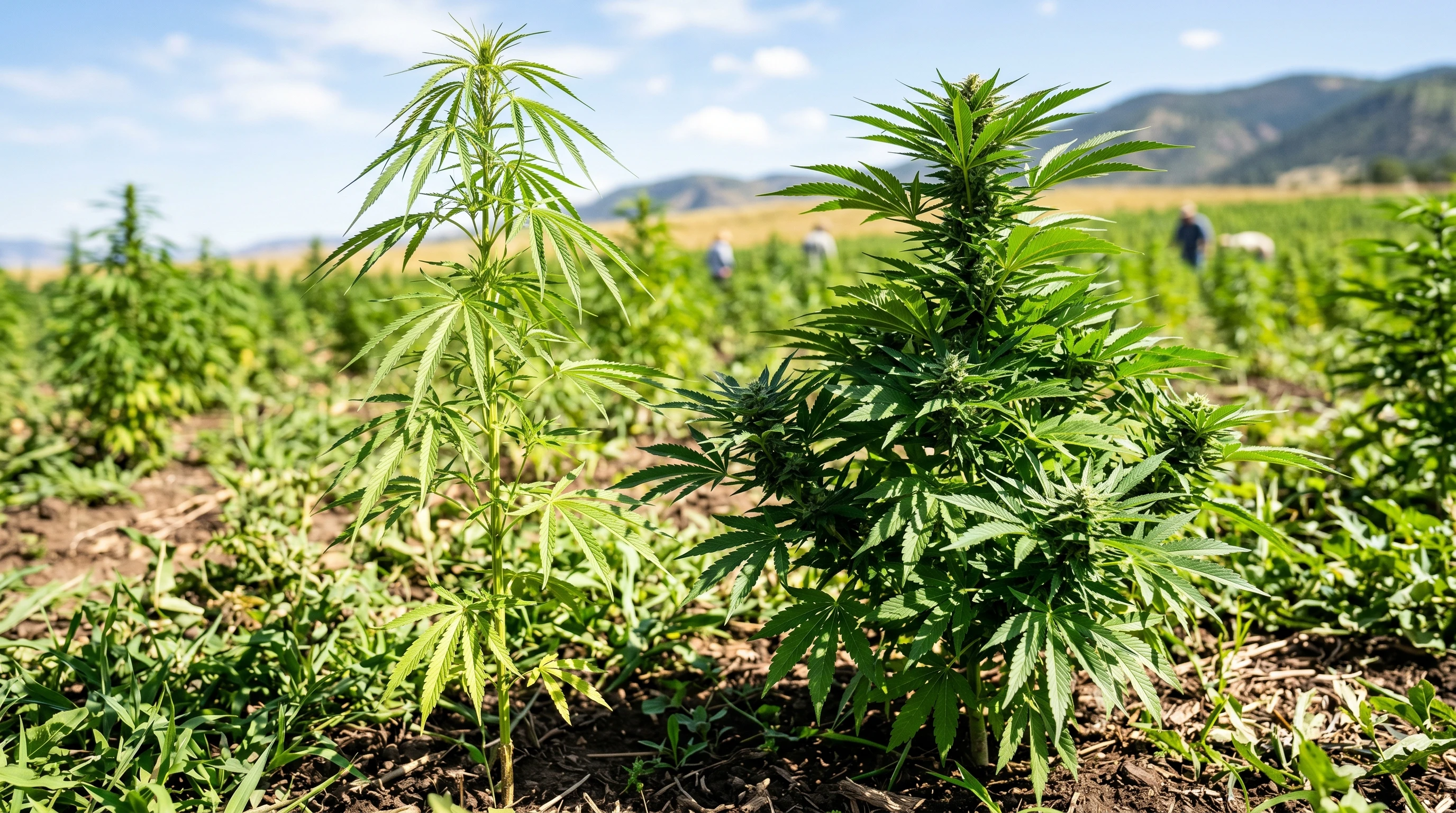
Hemp grown for fiber is often planted close together and may grow tall with long stalks. Marijuana plants grown for flower are often spaced farther apart and managed to produce dense buds rich in cannabinoids and terpenes. Marijuana flower is also often more aromatic because growers select for terpene-rich, resinous buds.
Still, genetics and growing methods can blur the visual difference. Some hemp varieties are grown for CBD-rich flowers and may look similar to marijuana. That is why lab testing and THC content matter more than appearance.
How to Shop Hemp or Cannabis Products More Safely
Shopping can get confusing because labels often use similar words: hemp, cannabis, CBD, full-spectrum, broad-spectrum, isolate, delta-8, THCA, THC-free, hemp extract, hemp oil, and hemp seed oil. Some of those terms are helpful. Others are easy to misunderstand.
1. Ask what the product actually contains
Do not stop at the front label. Look for the active ingredient list. Is it hemp seed oil? CBD? Full-spectrum hemp extract? Delta-8 THC? THCA? A topical? A gummy? A vape? Each category has different legal and safety questions.
2. Look for a certificate of analysis
A certificate of analysis, often called a COA, is a lab report that should show cannabinoid levels, THC content, and testing for contaminants such as heavy metals, pesticides, solvents, or microbes. Avoid cannabinoid products that do not make current third-party testing easy to find.
3. Be cautious with “THC-free” claims
Some labels are accurate. Others are not. The Department of Transportation warns that many CBD labels may be misleading and that CBD use is not accepted as a medical explanation for a confirmed marijuana-positive drug test in DOT-regulated roles.
4. Know your state law
Federal law is only part of the story. State laws can be stricter, especially around intoxicating hemp-derived cannabinoids, smokable hemp, THC beverages, CBD foods, age limits, and online sales.
5. Avoid medical miracle claims
Be skeptical of any CBD or cannabis product claiming to cure cancer, Alzheimer’s disease, anxiety disorders, diabetes, chronic pain, or other serious conditions. Strong disease-treatment claims should be backed by FDA-approved drug evidence, not just marketing language.
Can Hemp or CBD Make You Fail a Drug Test?
Traditional hemp foods such as hemp seeds or hemp seed oil are unlikely to create a drug-testing problem for most people. CBD and hemp-derived cannabinoid products are different.
Full-spectrum CBD products may contain trace THC. Some products may contain more THC than the label suggests. Regular use, higher doses, mislabeled products, or contaminated products can increase risk. If your job, license, probation status, military service, sports program, or professional role depends on drug testing, be very careful.
Helpful workplace reference: The DOT CBD notice is available at Transportation.gov.
Common Misconceptions About Hemp and Cannabis
Misconception: Hemp and cannabis are totally different plants.
Not quite. Hemp is a type or legal category of cannabis. The difference is based mainly on THC content, use, and regulation.
Misconception: Anything hemp-derived is automatically safe.
No. Hemp fiber and hemp seeds are very different from concentrated hemp-derived cannabinoid products. Gummies, vapes, oils, tinctures, and extracts need closer label review.
Misconception: CBD has no risks.
CBD is non-intoxicating, but that does not mean risk-free. It can interact with medications and may not be appropriate for everyone.
Misconception: Cannabis always gets you high.
Not always. CBD-dominant products and traditional hemp products do not create the same high associated with THC. But cannabis products with meaningful THC levels can be intoxicating.
Misconception: If it is sold online, it must be legal.
Online availability does not guarantee legal compliance. Hemp and cannabis rules vary by product type, state, age restriction, THC content, and how the product is marketed.
Quick FAQ: Hemp vs Cannabis
Is hemp the same as cannabis?
Hemp is cannabis, but it is a specific low-THC legal category. Cannabis is the broader plant category. Marijuana usually refers to cannabis regulated for higher THC, medical, or adult-use effects.
Is hemp legal everywhere in the United States?
Not in every product form. Hemp farming and many hemp products are federally recognized, but CBD, edibles, smokable products, intoxicating hemp-derived cannabinoids, and finished consumer products may be restricted by federal or state rules.
Will hemp get you high?
Traditional hemp seed, hemp fiber, hemp clothing, and hemp seed oil will not get you high. However, some hemp-derived cannabinoid products may be intoxicating depending on THC content, cannabinoid type, and product formulation.
Is CBD from hemp different from CBD from marijuana?
The CBD molecule is the same, but the product surrounding it may be different. Hemp-derived CBD products are usually expected to contain low THC, while marijuana-derived products may contain higher THC depending on the formulation and state regulations.
What is the difference between hemp oil and CBD oil?
Hemp oil often means hemp seed oil, which is mainly a nutritional or skin-care oil from hemp seeds. CBD oil contains cannabidiol and other possible cannabinoids from hemp extract. Always check whether the label says “hemp seed oil” or “CBD/hemp extract.”
What should I look for before buying CBD?
Look for a current third-party lab report, clear THC content, transparent ingredients, batch numbers, company contact information, and cautious health wording. Avoid products that promise disease cures or hide their test results.
The Takeaway: Hemp Is Useful, Cannabis Is Complex, and Labels Matter
The difference between hemp and cannabis is more than a word choice. It affects legality, safety, product quality, medical claims, and whether a product may contain THC. Hemp can be a valuable plant for food, fiber, skin care, wellness products, and industrial uses. Cannabis can also have medical and adult-use applications where legal, but it comes with stricter rules and more safety considerations.
The smartest move is simple: know what you are buying, read the lab report, understand your state law, and be cautious with any product that affects your health, job, or ability to drive safely.
Check the COA
Know your state law
Avoid miracle claims
Sources and Further Reading
- Congress.gov — H.R. 5371 text and 2026 hemp definition changes
- USDA Agricultural Marketing Service — Hemp production rules and resources
- FDA — Regulation of cannabis and cannabis-derived products, including CBD
- FDA — CBD safety concerns and regulatory pathway statement
- U.S. Department of Justice — April 2026 marijuana scheduling update
- U.S. Department of Transportation — CBD and drug-testing notice
- NCCIH — Cannabis, marijuana, and cannabinoids overview
“`