

A bag of hemp protein can tell you how many grams of protein are in a serving. What it usually cannot tell you is how completely that protein is digested—or how its amino-acid quality compares with another protein source.
That gap creates a lot of confusing claims. You may see hemp described as “highly digestible,” “complete,” “easy to absorb,” or even given a single percentage that sounds as though it applies to every scoop.
It does not work quite that neatly.
Evidence checked September 12, 2026
Hemp Nutrition · Protein Quality · Label-First Guidance
By Kevin Meyer · General nutrition education · No product endorsements
Quick answer: Can your body digest hemp protein?
Yes. Hemp protein can be substantially digested, but there is no single absorption or digestibility percentage that belongs to every hemp protein powder.
Studies have found that hemp protein digestibility varies according to the particular hemp ingredient being tested. Processing, hulling, protein concentration, amino-acid composition, and the research method can all affect the result.
There is another important distinction: digestibility and protein quality are not the same thing. Hemp contains all nine essential amino acids, but lysine is commonly the limiting amino acid in hemp protein-quality research. A protein can therefore be fairly digestible without receiving the highest overall protein-quality score.
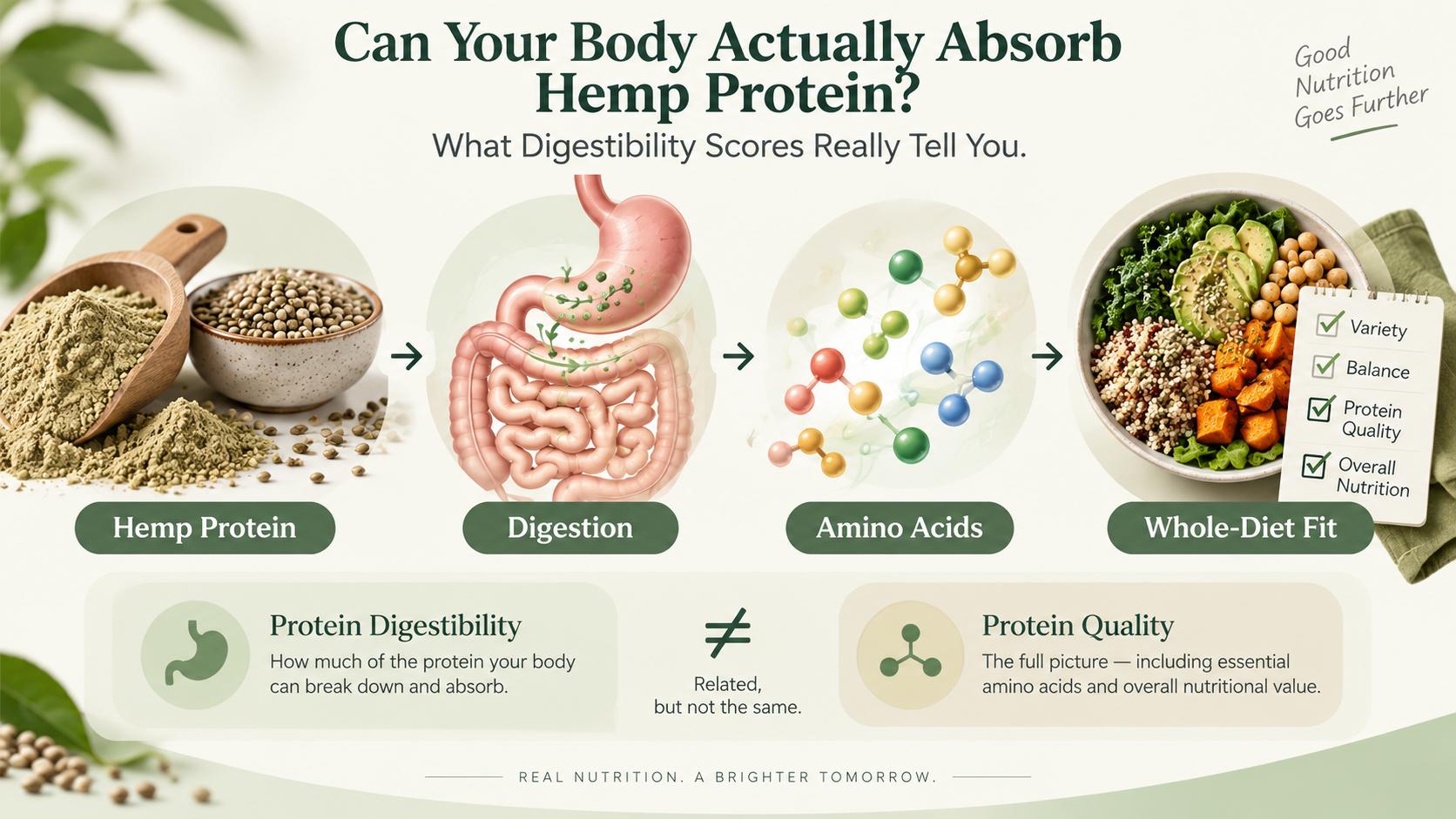
Why “absorbed” is the wrong place to start
When someone asks, “How much hemp protein does my body absorb?” they are often combining several different questions.
Your Nutrition Facts label can answer this.
Research can estimate this for the specific ingredient that was tested.
Protein-quality methods consider this separately from simple protein grams.
That depends on your meals, other protein sources, serving size, preferences, and individual needs.
Those questions overlap, but they are not interchangeable.
What does protein digestibility actually mean?
Your digestive system breaks dietary proteins into smaller peptides and amino acids. Those amino acids can then be absorbed through the intestinal tract and used for many jobs throughout the body.
Researchers use controlled methods to estimate how much of a particular protein is digested. The important phrase is particular protein.
A value measured from one hemp seed ingredient does not automatically describe every hemp protein powder on a store shelf.
Digestibility is also not the same as digestive comfort. A powder can be well digested as a protein and still leave someone feeling overly full, gassy, or uncomfortable because of fiber, serving size, added sweeteners, gums, other ingredients, or the rest of the meal.
If your real concern is discomfort after a shake, use my
hemp protein gas and bloating guide.
That is a different question from laboratory protein digestibility.
What research tells us about hemp protein digestibility
One of the most frequently cited studies on hemp protein quality was published by James House, Jason Neufeld, and Gero Leson in 2010. The researchers compared several hemp seed products and evaluated their protein using the Protein Digestibility-Corrected Amino Acid Score, better known as PDCAAS.
The important finding for everyday shoppers is not one magic number. Protein quality differed among the hemp products being studied, and lysine was the first limiting amino acid.
You can review the study through the
National Library of Medicine.
More recent research reinforces the same caution against treating hemp protein as one standardized ingredient.
A 2023 study compared defatted hemp hearts with two hemp protein concentrates. The researchers found meaningful differences among the three hemp protein sources, including differences in measured protein digestibility and protein-quality scores.
In other words, even two products that could broadly be called “hemp protein” did not behave identically in testing.
You can read the
full 2023 hemp protein study here.
The evidence boundary matters
These studies do not tell you, “Kevin absorbs exactly 88% of this retail protein powder.” They tested specific hemp ingredients under specific research conditions. Their results help us understand hemp protein quality, but they should not be converted into a personal absorption percentage.
Why can a protein be digestible without earning a perfect protein-quality score?
Because digestibility answers only part of the protein-quality question.
Your body requires nine essential amino acids from food. Hemp protein contains all nine, which is why hemp is commonly described as a
complete protein.
But “contains” and “contains in ideal proportions” are not the same thing.
When scientists compare a food’s essential-amino-acid pattern with a reference pattern, the essential amino acid present in the lowest relative proportion becomes the limiting amino acid.
In hemp protein research, that amino acid is commonly lysine.
Protein digestibility + essential-amino-acid pattern = a more useful picture of protein quality
One good number does not make the other part irrelevant.
PDCAAS vs. DIAAS: what do those scores mean?
Two abbreviations appear frequently when protein quality is discussed: PDCAAS and DIAAS.
| Measure | What it helps evaluate | Main limitation for shoppers |
|---|---|---|
| Protein grams | How much protein is listed in the serving | Does not measure amino-acid quality or digestibility |
| Digestibility | How much of the tested protein is digested under the study method | A result from one tested ingredient is not universal |
| PDCAAS | Combines an amino-acid score with an estimate of overall protein digestibility | Does not evaluate the digestibility of each essential amino acid individually |
| DIAAS | Evaluates digestible indispensable amino acids individually, using ileal digestibility when appropriate data are available | You still need data for the specific food or ingredient being evaluated |
The Food and Agriculture Organization recommended DIAAS as an improved approach because it treats indispensable amino acids individually and favors digestibility measurements taken at the end of the small intestine rather than relying only on total-tract protein digestibility.
That does not make older PDCAAS research worthless. It means you should avoid comparing numbers from different methods as though they measured exactly the same thing.
For readers who want the technical background, see the
FAO report on dietary protein quality evaluation.
Why hemp protein powders can differ from one another
“Hemp protein” sounds like one ingredient. In practice, the products underneath that label can differ considerably.
Removing more hull material changes the proportion of fiber and other seed components.
Hemp protein powders are often made after much of the seed oil has been mechanically removed.
Additional milling, sifting, or separation can produce a powder with more protein per gram.
Cultivar, seed composition, and manufacturing choices can all influence the final ingredient.
That is why I would be cautious with any article or label that says simply, “Hemp protein is 90% digestible,” without telling you what was tested.
A better question is:
Which hemp ingredient produced that number, and how was it measured?
Hemp vs. pea vs. whey: digestibility is only one part of the choice
If you are comparing protein powders, the “highest digestibility” number is rarely enough to choose the best product for your kitchen.
| Question | Hemp protein | Pea protein | Whey protein |
|---|---|---|---|
| Plant based? | Yes | Yes | No; dairy derived |
| Fiber? | Can be meaningful, depending on processing | Often low in isolates | Usually very little unless added |
| Protein concentration? | Varies; conventional powders may be less concentrated | Isolates are often highly concentrated | Concentrates and isolates are generally protein-dense |
| Best question to ask | Do I want protein plus the fiber and seed profile this label provides? | Do I want concentrated plant protein with less powder? | Does dairy fit my diet and protein goal? |
For a deeper plant-protein comparison, read
Hemp Protein vs. Pea Protein.
If dairy is an option for you, see
Hemp Protein vs. Whey Protein.
What your Nutrition Facts label can tell you
Your package will probably not give you a PDCAAS, DIAAS, or personal absorption percentage.
It can still answer an extremely useful question:
How concentrated is this powder in protein?
A simple label calculation
Protein concentration (%) = protein grams ÷ serving weight in grams × 100
Suppose a fictional hemp powder lists:
- 30-gram serving
- 15 grams of protein
15 ÷ 30 × 100 = 50% protein by weight.
That does not mean you absorb 50% of it. It simply means half of the labeled serving weight is protein.
That one calculation can make product comparisons much fairer because scoop sizes vary.
How much hemp protein should you actually use?
A digestibility score should not be turned into a serving recommendation.
The amount of protein a person needs depends on factors that a product label cannot determine for you, including overall diet, body size, life stage, activity, and health circumstances.
If your question is really about portion size, start with
How Much Hemp Protein Powder Should You Take Per Day?.
The scoop is a measuring tool. It is not an individualized protein prescription.
What FDA’s hemp-seed decision does—and does not—tell you
This is another area where wording matters.
In 2018, FDA completed its evaluation of three GRAS notices involving hulled hemp seed, hemp seed protein powder, and hemp seed oil. FDA stated that it had no questions regarding the submitter’s conclusion that the specified ingredients were generally recognized as safe under their intended conditions of use.
That is not the same as saying FDA approved every hemp protein powder on the market.
The agency also explains that hemp seeds themselves do not naturally contain THC or CBD, although trace amounts can reach hemp-seed ingredients through contact with other plant material during harvesting and processing.
You can read
FDA’s hemp-seed ingredient update here.
Protein quality is not the same as product quality
A discussion of amino acids and digestibility cannot tell you whether your particular bag was manufactured well, stored correctly, accurately labeled, or adequately tested for contaminants.
Those are separate checks.
If a company advertises “third-party tested,” look for the actual report when available. Check whether it identifies the product or batch, the laboratory, test date, compounds or elements tested, units used, and numerical results.
If toxic elements are your main concern, use my
guide to heavy metals in hemp protein.
It explains why a detectable amount and a meaningful exposure are not automatically the same thing.
The P.I.C.K. hemp protein digestibility planner
Instead of trying to calculate a personal absorption percentage, use four checks that you can actually verify.
Decide what you want from the powder: convenient protein, protein plus fiber, a plant-based smoothie ingredient, or something else.
Check serving weight, protein, fiber, calories, sodium, ingredients, allergens, storage instructions, and any testing claims.
Compare protein grams with serving weight. Keep protein concentration, digestibility, amino-acid quality, and digestive comfort separate.
Consider the other protein foods you eat during the day. One scoop does not need to be your entire nutrition strategy.
Planner rule: Never convert a study’s hemp protein digestibility value into “my body absorbs exactly this percentage of my scoop.” That is more precision than the evidence can support.
Four-question knowledge check
Choose your answer before opening each explanation.
1. If hemp protein is highly digestible, does that automatically make its protein-quality score perfect?
No. Amino-acid balance matters too. Lysine commonly limits hemp’s protein-quality score even though the protein itself can be substantially digested.
2. Does gas after a hemp shake prove that its protein was poorly digested?
No. Gas or fullness may involve fiber, serving size, other ingredients, sweeteners, the rest of the meal, or individual digestive factors. Digestive comfort is not the same measurement as protein digestibility.
3. Can one hemp protein digestibility percentage be applied to every brand?
No. Research shows differences among hemp seed products and hemp protein ingredients. Processing and composition matter.
4. A 30-gram serving contains 15 grams of protein. Does that mean 50% is absorbed?
No. It means the serving is 50% protein by weight. It tells you nothing directly about the percentage of protein digested or absorbed.
Frequently asked questions
Is hemp protein easy to digest?
Hemp protein can have substantial measured digestibility, but the exact result depends on the hemp ingredient and testing method. If by “easy to digest” you mean whether it causes gas or stomach discomfort, that is a separate question.
How much hemp protein does your body absorb?
There is no reliable universal percentage for every person and every hemp protein product. Research values describe the particular ingredients and methods used in those studies, not a personalized absorption rate for your scoop.
Is hemp protein a complete protein?
Yes. Hemp contains all nine essential amino acids. However, lysine is commonly limiting relative to the reference patterns used to evaluate protein quality, so “complete” should not be interpreted as “identical to every other complete protein.”
Why can hemp have good digestibility but a lower PDCAAS?
Because PDCAAS incorporates both digestibility and the amino-acid score. Relatively low lysine can limit the final score even when overall protein digestibility is substantial.
Is DIAAS better than PDCAAS?
FAO recommends DIAAS as a more refined way to assess protein quality because it evaluates digestible indispensable amino acids individually and favors ileal digestibility data. PDCAAS is still widely encountered, so the important step is understanding which method produced the number you are reading.
Is hemp protein less digestible than whey?
You should not decide that from the ingredient names alone. Whey and hemp differ in protein concentration, amino-acid profile, processing, fiber, dairy status, and the research available for specific ingredients. Compare the actual products and your reason for using them.
Does processing improve hemp protein digestibility?
Processing changes the ingredient, but “more processed” does not automatically mean “more digestible.” Research comparing hemp protein sources shows that different concentrates can produce different results.
Do I need to combine hemp with another protein at every meal?
Most people eating a varied diet do not need to create a perfectly complementary amino-acid combination at every meal. Your overall protein intake and variety across the day matter more than forcing every individual scoop to do everything.
The bottom line
Your body can digest hemp protein, but the most useful answer is not a single percentage.
Different hemp protein ingredients can produce different digestibility and protein-quality results. Hemp also contains all nine essential amino acids while tending to be relatively limited in lysine when evaluated against reference patterns.
That makes the practical approach fairly simple:
read your actual label, compare protein on equal terms, understand what the research number really measures, and judge hemp protein as one part of your overall diet.
What does your hemp protein label make you wonder about?
Take a look at the serving size, protein grams, and fiber on the hemp protein you use. Is your biggest question digestibility, protein concentration, amino acids, texture, cost, or digestive comfort?
Tell me in the comments. Your question may help shape the next hemp nutrition guide—and it may help another reader who is looking at the same confusing claims.
Evidence and further reading
-
House JD, Neufeld J, Leson G. Evaluating the quality of protein from hemp seed products using the PDCAAS method.
-
Nosworthy MG, Franczyk A, Neufeld J, House JD. The in vivo and in vitro protein quality of three hemp protein sources.
-
Food and Agriculture Organization. Dietary Protein Quality Evaluation in Human Nutrition.
-
U.S. Food and Drug Administration. Hemp seed-derived ingredients for use in human food.
Nutrition note: This article provides general food and nutrition education. It does not calculate an individual’s protein absorption, diagnose digestive symptoms, or provide an individualized protein prescription. People with kidney disease, medically directed diets, significant digestive symptoms, food allergies, pregnancy-related nutrition needs, childhood nutrition concerns, or other medical circumstances should use guidance from an appropriate qualified health professional.