

Two plant-protein bags can solve very different problems
You want a dependable protein boost, but one powder looks green and fibrous while the other is pale and smooth. The front of each bag promises plant protein. That does not mean the powders will deliver the same protein concentration, fiber, texture, or experience in your stomach.
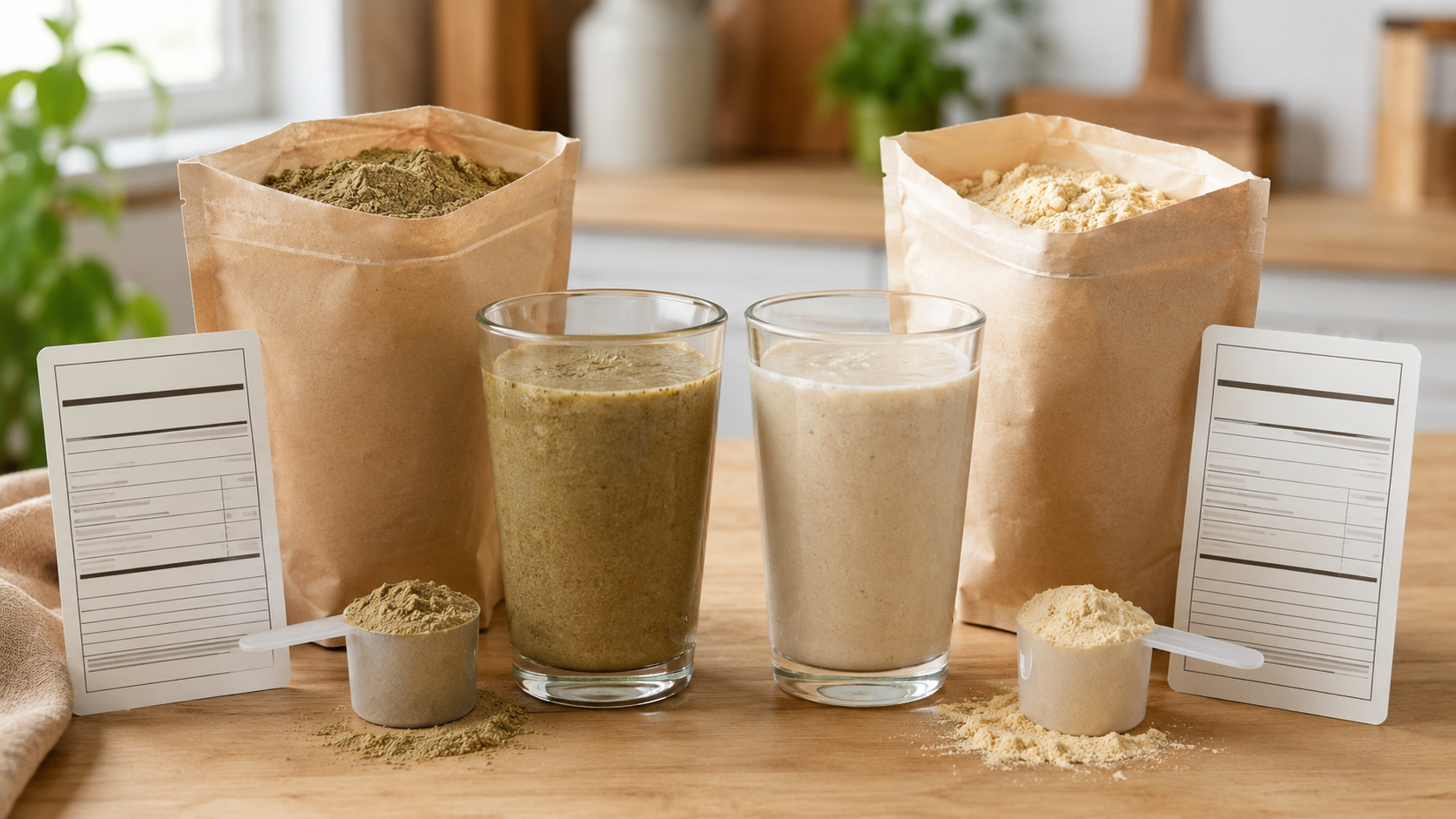
Quick answer: Is hemp protein or pea protein better?
Neither powder is automatically better. Hemp protein often fits readers who want plant protein with meaningful fiber and do not mind an earthy flavor or more noticeable texture. Pea protein isolate often fits readers who want more protein in a smaller amount of powder and less fiber, although the exact formula can still taste chalky or contain added ingredients.
A U.S. Food and Drug Administration response letter described several notified hemp protein formulations ranging from about 33% to more than 64.5% protein, with 9% to 41% fiber. A separate response letter described one pea protein isolate as more than 80% protein with about 1% fiber. Those figures explain why the categories can differ; they are not universal nutrition facts for every retail bag.
If hemp protein is already in your kitchen and that new scoop has been uncomfortable, begin with the hemp protein gas and bloating checklist so you can separate the powder from the rest of the smoothie.
What are you actually comparing?
Hemp protein powder is generally made after hemp seeds are mechanically pressed to remove oil. The remaining seed cake is milled and sifted, and some manufacturers use additional processing to raise the protein concentration. This is why hemp powder is not simply a bag of finely ground hemp hearts.
Pea protein is a broader label. A pea protein isolate is produced from dried peas after much of the starch and fiber has been separated. Concentrates, isolates, hydrolyzed products, flavored powders, and multi-protein blends should not be treated as one identical ingredient.
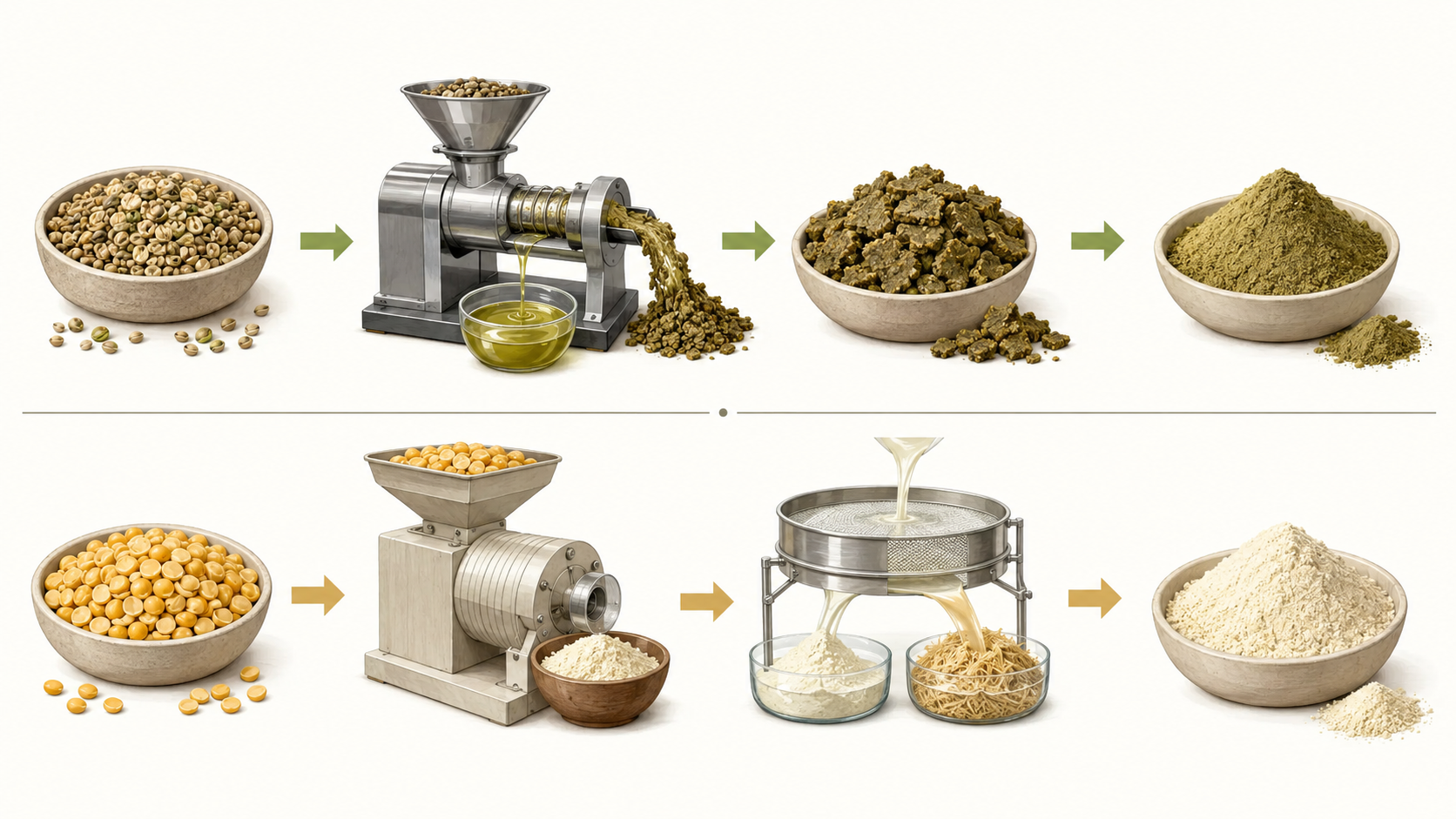
Hemp protein vs. pea protein at a glance
On a phone, swipe the table sideways to see every column.
| Question | Hemp protein powder | Pea protein powder or isolate | What to verify |
|---|---|---|---|
| Where does it start? | Hemp seeds, commonly after oil pressing. | Dried yellow or green peas, with isolate processing removing much of the starch and fiber. | The exact ingredient name—not merely “plant protein.” |
| Protein concentration | Often lower than pea isolate, but grades and serving sizes vary. | Isolates are commonly more concentrated; blends and concentrates may differ. | Protein grams, serving weight, and protein per equal 30-gram amount. |
| Fiber | Can be substantial because the milled seed material may retain fiber. | An isolate may be low in fiber after separation, but a finished blend may add fiber back. | Fiber grams and added fibers such as inulin or chicory-root fiber. |
| Flavor and texture | Usually earthier, darker, and sometimes grittier or drier. | Usually paler and milder, but it can still taste beany or feel chalky. | Plain versus flavored, liquid needed, and whether you will finish the drink. |
| Amino acids | Contains all essential amino acids, but proportions and digestibility matter; lysine is commonly limiting in hemp protein-quality research. | Contains all essential amino acids and often supplies more leucine than hemp in compositional comparisons. | The full day’s protein pattern—not a “complete protein” badge alone. |
| Digestive fit | Higher fiber, a large scoop, or other ingredients may contribute to fullness or gas for some people. | Lower fiber does not guarantee comfort; residual pea carbohydrates, serving size, sweeteners, gums, and other ingredients can still matter. | One product at a time, a measured serving, the full recipe, timing, and symptom pattern. |
| Best practical fit | Readers who want protein plus the product’s labeled fiber and accept a stronger seed flavor. | Readers who prioritize concentrated protein and a lower-fiber base. | Your primary goal, realistic meal, and actual label. |
Which powder gives you more protein?
Pea protein isolate will often provide more protein for the same weight of powder. That is a consequence of separating much of the pea’s starch and fiber—not proof that the plant itself is universally “better.” A hemp protein concentrate can differ substantially from a coarser, higher-fiber hemp powder, just as a plain pea isolate differs from a sweetened multi-protein shake.
Use two comparisons:
- Compare the labeled serving. This shows what each manufacturer expects you to use and what the full serving contributes.
- Compare equal weights. Recalculate protein, fiber, calories, sodium, and other nutrients at the same gram weight—30 grams is a convenient comparison, not a required serving.
A larger scoop can create a larger number without creating a more concentrated powder. Scoop volume is not standardized, so use the gram weight printed on the package.
Does “complete protein” settle the decision?
No. Hemp and pea proteins contain all essential amino acids, but “contains every essential amino acid” does not mean equal proportions, equal digestibility, or equal results from every serving.
A laboratory analysis of commercially available protein isolates found meaningful differences among plant proteins. The hemp sample had less leucine than the pea sample and several other proteins. That is useful composition evidence, but it was not a head-to-head trial showing that one retail smoothie produced better health or training outcomes.
The practical lesson is modest: look at the amount of protein in the serving, eat a varied diet across the day, and do not let a front-label “complete protein” claim erase serving size, tolerance, or the rest of the meal.
Which is easier on your stomach?
There is no universal winner. A plain pea isolate may contain less fiber than a hemp powder and therefore create a smaller sudden fiber change. That does not make every pea product “easy to digest,” and it does not make hemp inherently difficult.
The National Institute of Diabetes and Digestive and Kidney Diseases notes that too much fiber can increase gas symptoms for some people. It also points to dairy, certain fruits, legumes, high-fat foods, sweeteners ending in “-ol,” and the total eating pattern as possible contributors. A smoothie can contain several of those variables at once.
If hemp feels too heavy
Check the fiber grams, serving weight, other ingredients, and total smoothie volume. Do not assume the word hemp explains the entire reaction.
If pea feels uncomfortable
Check whether it is an isolate, concentrate, or blend and look for added fibers, sugar alcohols, gums, dairy ingredients, or other proteins.
For mild, non-emergency symptoms, test only one product at a time, follow its directions, keep the rest of the recipe familiar, and record the timing. Persistent or worsening pain, vomiting, diarrhea, constipation, bleeding, weight loss, or symptoms that interfere with daily life deserve professional guidance.
Allergy symptoms are not a texture or fiber problem
Neither hemp nor pea is one of the nine major food allergens named in U.S. federal law, but foods outside that list can still cause allergic reactions. Hives, mouth itching, facial or lip swelling, wheezing, throat swelling, difficulty breathing, dizziness, or loss of consciousness require a different response from ordinary fullness.
Stop eating a product and seek medical guidance for a suspected reaction. Difficulty breathing, throat swelling, or loss of consciousness is an emergency. Do not run a home comparison test after a suspected food allergy; an allergist should guide the next step.
Which is better after a workout?
Pea isolate may make it easier to reach a larger protein amount with less powder, and compositional research generally places pea above hemp for leucine concentration. That can make pea a practical first choice when concentrated protein is the only job.
It still does not prove that every pea shake outperforms every hemp shake. The labeled protein amount, the full meal, total daily protein, training, energy intake, food preferences, and consistency all matter. Hemp can contribute useful protein, especially when its fiber and flavor fit the meal you will actually consume.
If a clinician or sports dietitian has given you a protein target—or if you manage kidney disease, a medically directed diet, pregnancy, childhood nutrition, or another condition—use that individualized plan rather than a universal scoop recommendation from the internet.
Do hemp or pea protein powders contain CBD or THC?
Pea protein does not come from cannabis and should not contain hemp cannabinoids. Hemp seeds themselves do not naturally produce meaningful CBD or THC. Trace cannabinoid amounts can reach seed-derived ingredients through contact with resin-bearing plant parts during harvesting or processing, but hemp seed protein is not a CBD product and should not be expected to produce CBD effects or a high.
If a powder deliberately adds “hemp extract,” CBD, or other cannabinoids, it is no longer the simple seed-protein product discussed here. Read Hemp Seed Oil vs. CBD Oil before treating any vague “hemp” label as nutritional shorthand.
The Hemp-or-Pea Fit Planner
Use this planner with the two actual packages you are considering. Its job is to replace a vague “Which is healthier?” question with a choice you can verify.
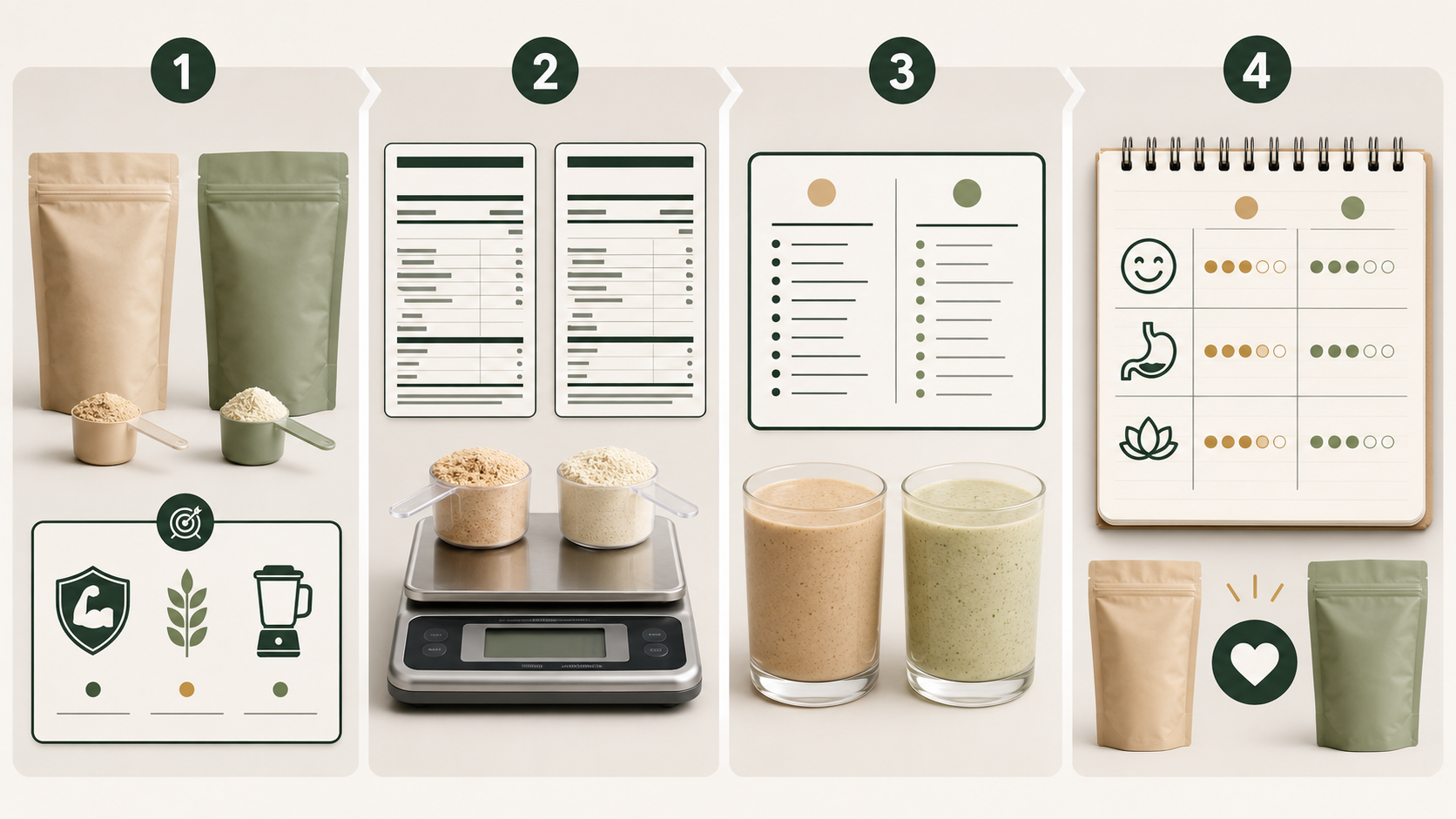
- Name the powder’s job.Choose one primary need: concentrated protein, more labeled fiber, a milder smoothie, fewer ingredients, or a powder that works in baking. A product cannot “win” until the job is clear.
- Equalize the labels.Write down serving weight, protein, fiber, fat, calories, sodium, and added sugar. Compare both the labeled servings and an equal gram weight. Do not compare one tablespoon with an oversized scoop.
- Audit the complete formula.Circle every protein source, added fiber, sweetener, gum, flavor, dairy ingredient, and allergen statement. A reaction to a chocolate plant blend does not identify which ingredient caused it.
- Test the real-world fit safely.On separate occasions, follow each label and use a simple, familiar recipe. Record taste, thickness, fullness, digestive comfort, convenience, and whether you would willingly use the product again. Stop and seek care for concerning symptoms.
Four-question knowledge check
Choose your answer before opening each explanation.
1. Does a larger scoop prove that a powder is more protein-concentrated?
Answer: No. Scoop sizes vary. Compare protein with the serving’s gram weight and, when useful, recalculate both products at the same weight.
2. Is every hemp protein powder higher in fiber than every pea powder?
Answer: No. Many hemp powders retain substantial fiber and many pea isolates are low in fiber, but processing and added ingredients can reverse assumptions. Read the actual labels.
3. Does “complete protein” mean hemp and pea have identical amino-acid profiles?
Answer: No. Both contain all essential amino acids, but their proportions and digestibility differ. The serving and the rest of the day’s diet still matter.
4. Should hives or lip swelling be handled like ordinary post-smoothie fullness?
Answer: No. Those symptoms may indicate an allergic reaction. Stop the product and seek appropriate care; breathing difficulty, throat swelling, or loss of consciousness is an emergency.
Frequently asked questions
Is hemp protein better than pea protein?
Not universally. Hemp may fit when you value its labeled fiber and seed-forward profile. Pea isolate may fit when concentrated protein and less fiber matter more. Ingredients, serving size, taste, cost, and tolerance can change the answer.
Which powder usually has more protein?
Pea protein isolate is usually more protein-concentrated by weight than conventional hemp protein powder. Confirm this on the two labels because concentrates, blends, and serving sizes vary.
Which is less likely to cause gas?
No powder can promise that. A low-fiber pea isolate may create less of a sudden fiber change than a higher-fiber hemp powder, but pea-derived ingredients, sweeteners, gums, dairy, the rest of the smoothie, and individual conditions can still matter.
Can I mix hemp and pea protein?
Many recipes can combine protein sources, but mixing also makes taste, texture, nutrient amounts, and symptoms harder to interpret. Confirm both labels, stay within appropriate serving guidance, and test products separately first if tolerance is uncertain. Do not experiment after a suspected allergy.
Is pea protein automatically better for muscle gain?
No. Pea isolate often provides more protein and leucine per gram than hemp, which can make it convenient, but muscle gain also depends on total protein, adequate energy, resistance training, recovery, and consistency. Individual targets belong with a qualified professional when needed.
Are hemp and pea protein powders gluten-free?
The source ingredients do not contain gluten, but a finished product may contain added ingredients or face cross-contact during manufacturing. People with celiac disease or a medical need to avoid gluten should use a properly labeled product and follow their clinician’s guidance.
Will hemp protein make me high?
No. Hemp seed protein is made from seed-derived material and is not intended to deliver CBD or an intoxicating THC dose. A product that deliberately adds cannabinoid-rich hemp extract is a different formulation and requires a different safety review.
The bottom line
Hemp protein and pea protein are both useful plant-protein options, but they are not interchangeable green powders. Conventional hemp protein often brings more fiber, a stronger seed flavor, and a more noticeable texture. Pea isolate often brings more protein concentration and less fiber. Formulation can change every one of those expectations.
Begin with the job. Compare equal weights. Read every ingredient. Then test the powder in a meal you would realistically repeat. The best choice is not the bag with the loudest claim—it is the one whose label, texture, nutrition, and tolerance fit your actual day.
Authoritative sources and further reading
- U.S. FDA: GRAS Notice 771 response for hemp seed protein powder
- U.S. FDA: GRAS Notice 851 response for pea protein isolate
- Amino Acids: Protein content and amino acid composition of commercially available plant-based protein isolates
- NIDDK: Eating, diet, and nutrition for gas in the digestive tract
- U.S. FDA: Food allergies, labeling, and reaction symptoms
Nutrition and safety note: This article provides general education and does not diagnose, treat, or replace individualized advice from a physician, registered dietitian, allergist, sports dietitian, or other qualified professional. Individual guidance matters for food allergies, digestive disorders, kidney disease, medically directed diets, pregnancy, childhood nutrition, persistent symptoms, or performance nutrition.
What do your two labels actually say?
In the comment section, share the serving weight, protein grams, fiber grams, ingredient count, and whether the powder is an isolate, concentrate, or blend. Also tell us the job you want it to do: smoothie, breakfast, baking, or post-workout meal.
Please keep private medical details out of public comments. Label numbers and recipe goals are enough to help readers compare products without diagnosing one another.
Join the comment discussion