

Hemp nutrition · Whole-smoothie label guide · Evidence checked September 26, 2026
You add hemp protein to a smoothie, then wonder whether the drink fits your blood sugar plan. The useful place to start is the full glass: the powder, fruit, milk or plant beverage, oats, sweeteners, and the amount you actually drink.
By Kevin Meyer · General nutrition education · No product endorsement
Quick answer: Does hemp protein raise blood sugar?
Hemp protein powder is not a blood sugar treatment, and its name does not predict the response to a smoothie. Check Total Carbohydrate for the powder portion and every other ingredient, then compare the finished drink with your individual meal plan. Protein, fat, and fiber can change how quickly carbohydrate affects blood glucose, but they do not make the carbohydrate disappear.
If you use insulin or medicine that can cause low blood glucose, use your care team’s instructions for meal timing, carbohydrate counting, medication, and monitoring. Do not change a dose because of this article.
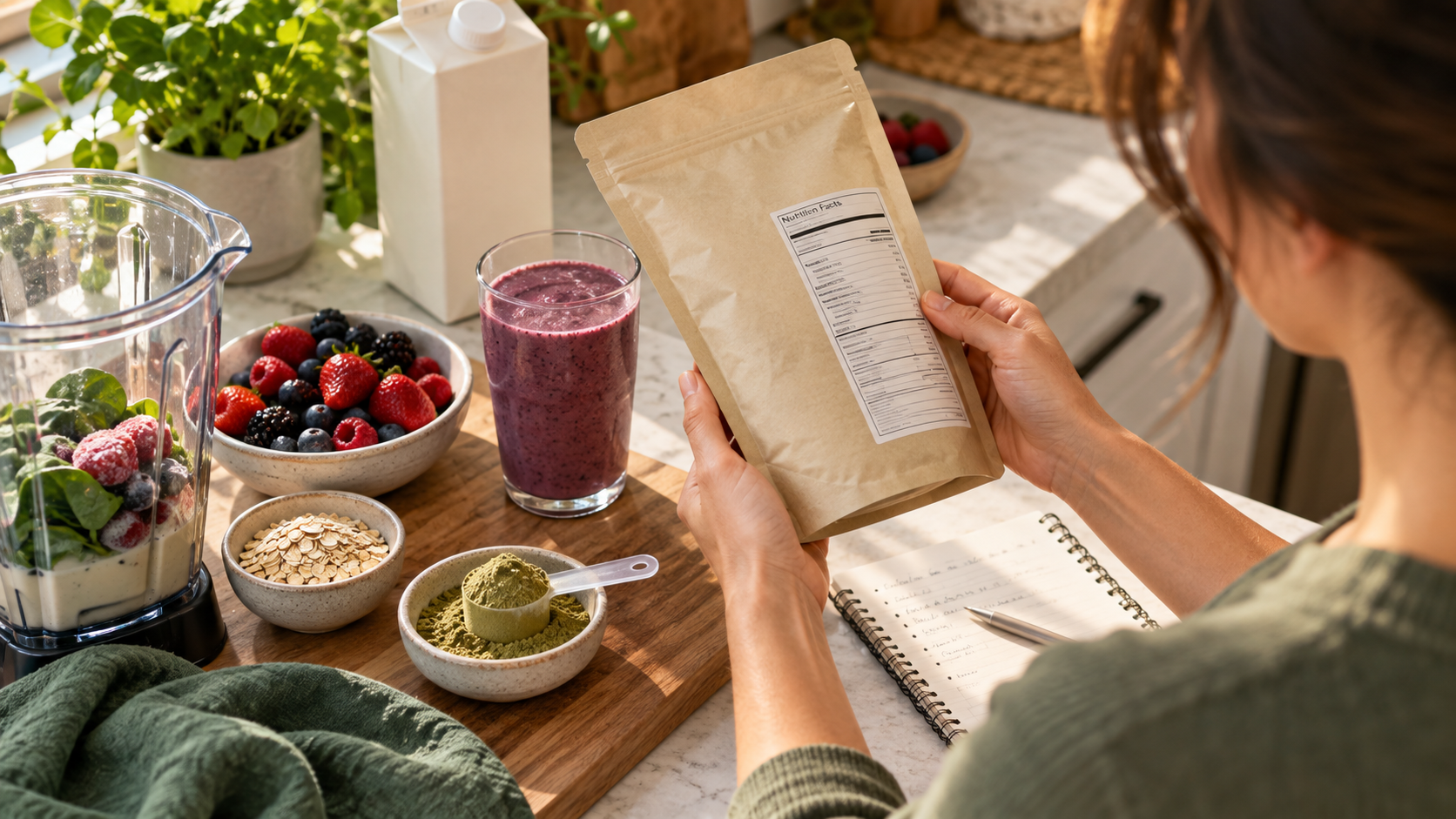
The question matters because a bag may say “no added sugar” while the recipe includes fruit, juice, sweetened milk, oats, or honey. The CDC’s carbohydrate-counting guide explains that sugars and starches affect blood glucose, while fiber is handled differently. “No added sugar” describes one part of a label; it does not mean zero total carbohydrate.
Read the powder label, then the rest of the glass
Hemp seed protein is a food ingredient. The FDA’s hemp seed ingredient notice addresses its use in foods under the conditions described there. It does not say that every commercial powder has the same nutrition profile or that hemp protein treats diabetes.
One product may be mostly milled hemp seed material with fiber; another may be a concentrated or flavored blend. Read the actual serving weight, Total Carbohydrate, Dietary Fiber, Total Sugars, Added Sugars, and ingredient list. If you use half or twice the labeled serving, adjust every number accordingly. For help with that step, see the site’s hemp protein serving guide.
Why “net carbs” can confuse the decision
For an initial comparison, record the label’s Total Carbohydrate and the serving size rather than assuming an advertised “net carb” figure is a universal diabetes rule. Fiber is useful context, but different foods and individual responses still matter. If your clinician or diabetes educator gave you a specific counting method, follow that method.
Quick comparison: three ways the same scoop changes context
The examples below describe ingredients, not measured blood glucose outcomes. Check portions and actual labels before comparing them.
| What you make | What to count | Useful next question |
|---|---|---|
| Hemp powder + water | The powder’s actual Total Carbohydrate and portion | Does it provide enough food for the meal or snack it replaces? |
| Hemp powder + berries + plain beverage | Powder, measured berries, and beverage label | Is the whole drink within your planned meal pattern? |
| Hemp powder + fruit juice + banana + sweetened beverage | Every ingredient, including liquid, fruit, and any sweetener | Would a different liquid, portion, or food eaten alongside fit better? |
The CDC’s meal-planning guidance notes that what accompanies carbohydrate can affect how quickly blood glucose rises. That principle does not justify promising a flat glucose line from any one recipe. If your goal is a filling breakfast, the site’s meal-replacement guide covers what a powder-and-water breakfast may leave out.
Visual checklist: from bag to finished drink
This on-page infographic sits next to the comparison so the decision steps remain readable on a phone and in print.
An example of label math, not a recommended target
Imagine a fictional recipe where the measured powder contributes 3 g Total Carbohydrate, the beverage 12 g, berries 10 g, and oats 15 g. The full recipe totals 40 g Total Carbohydrate. If it makes two equal glasses and you drink one, that illustrative portion contains about 20 g. Real products, weights, and recipes differ; use their labels or a reliable food database.
Do not turn the example into a universal “safe” smoothie limit. The CDC says carbohydrate needs vary by person, and people using mealtime insulin may need to match insulin to the amount consumed under their prescribed plan.
Use the P.I.C.K. planner for your actual smoothie
Carry the site’s P.I.C.K. method into this decision: Pick the meal’s job, Inspect every label, Calculate the full portion, and Keep notes that help you discuss the meal with your care team. You can print or copy the worksheet; it does not store your entries or calculate a medical target.
If you use medication that can cause lows, have kidney disease, are pregnant, or follow a prescribed diet, use your own clinical plan. See the site’s kidney-aware hemp protein guide for a separate mineral and protein check.
Four-question knowledge check
Choose an answer before opening each explanation. The answers use dark text and a solid background for readability.
1. A powder has zero added sugar. Does the smoothie have zero carbohydrate?
No. The powder may have other carbohydrate, and fruit, oats, milk, or juice can add more. Check Total Carbohydrate for the whole recipe and your portion.
2. Should you add Total Sugars to Total Carbohydrate?
No. The sugars line is part of Total Carbohydrate, not an extra amount to add on top.
3. Can protein and fiber guarantee that fruit juice will not raise blood glucose?
No. Other nutrients may change the rate of absorption, but a specific individual response cannot be promised from a recipe description.
4. If you take mealtime insulin, should you use this article to change your dose?
No. Use the carbohydrate-counting and dosing plan from your diabetes care team.
Frequently asked questions
Is plain hemp protein sugar-free?
Some plain powders list no added sugar, but formulations vary and “no added sugar” does not mean no Total Carbohydrate. Read the specific package and serving.
Are berries better than juice in a smoothie?
Whole fruit can bring fiber that juice may lack, and the portion still matters. Compare the ingredients you actually use with your meal plan rather than assigning a universal verdict to one fruit.
Can hemp protein lower A1C?
There is no basis here to promise an A1C reduction from adding hemp protein. A1C reflects longer-term blood glucose patterns, and diabetes care involves the whole eating pattern, activity, medicines, and monitoring plan. Discuss meaningful changes with your clinician.
Is a hemp smoothie suitable if I have diabetes and kidney disease?
It requires two separate checks. Your team may need to review carbohydrate alongside protein, potassium, phosphorus, sodium, fluid, and the rest of the day. The kidney guide explains why a generic smoothie recommendation is inadequate.
What if my glucose readings differ after the same recipe?
Timing, portion, medicines, activity, illness, stress, and other factors can affect readings. Record the actual recipe and the context, then review patterns with your care team. Do not diagnose a problem from one drink or one reading.
What to do with the answer
Keep a smoothie if you like it and its measured ingredients fit the plan you use. Adjust an ingredient or portion if the full recipe does not. You may also decide that a smaller drink with food alongside makes more sense. The point is to make a decision from the complete meal, not from the green color of the powder.
What is the hardest part of checking your smoothie? Is it the powder label, the liquid, the fruit portion, or the total recipe? Share a general label question in the comments; please leave out private medical information and personal glucose readings.
Evidence and further reading
- CDC: Carb Counting
- CDC: Diabetes Meal Planning
- NIDDK: Healthy Living with Diabetes
- FDA: Added Sugars on the Nutrition Facts Label
- FDA: Hemp Seed-Derived Ingredients in Food
Nutrition note: This article is general education. It does not diagnose diabetes, predict an individual glucose response, prescribe a carbohydrate target, or change medication. For personalized planning, work with your diabetes care team or a registered dietitian.